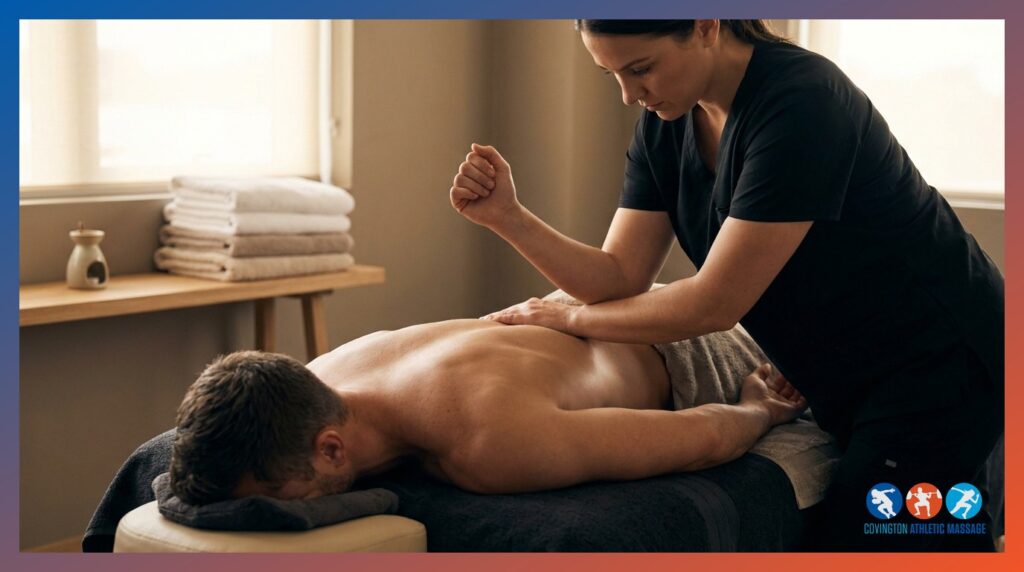
Full body recovery massage at Covington Athletic Massage is a structured sports massage session that treats the cumulative muscle stress athletes in Covington, Georgia build across training cycles. Full body recovery massage works the whole body as a therapeutic reset rather than a relaxation treatment, reducing post-exercise soreness, clearing metabolic waste, and relieving accumulated fatigue. Athletes use full body recovery massage as a regular recovery practice that keeps training consistent and protects long-term performance.
What Is a Full Body Recovery Massage?
A full body recovery massage is a structured therapeutic sports massage session targeting cumulative muscle stress across the whole body. The session manages training load and post-exercise soreness while relieving the fatigue that accumulates across a season of hard training.
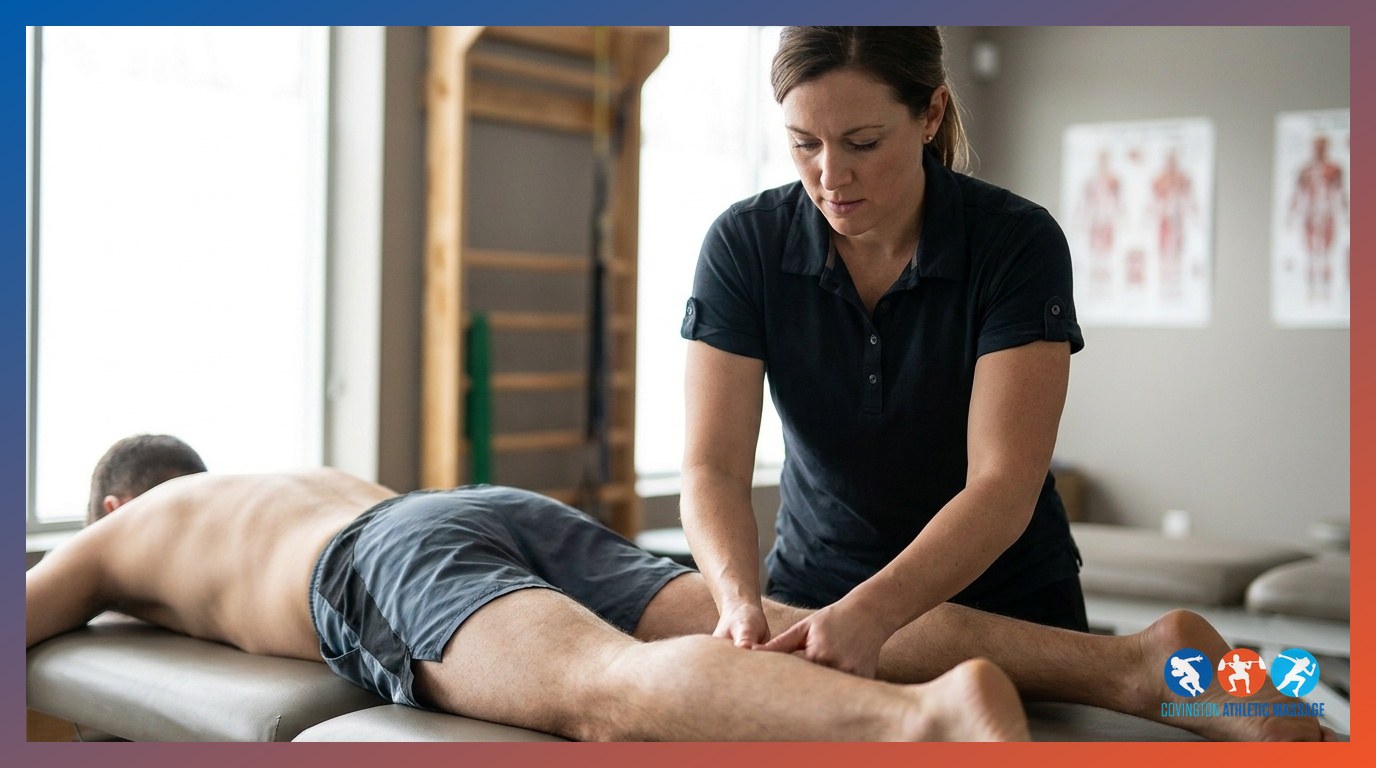
Cumulative training stress is the residue of repeated hard sessions: microscopic fibre damage and fascial tightness that build faster than rest alone clears. At Covington Athletic Massage, athletes book the appointment as a recurring recovery practice, the same way they schedule rest days.
The pressure backbone of the session is deep tissue massage, layered with myofascial release and targeted compression across the legs, hips, back, shoulders, and arms. The therapist works slowly and deliberately, following the athlete’s training week rather than a fixed routine.
The session pursues four physiological targets:
- Metabolic waste clearance. Rhythmic compression moves fluid through fatigued tissue. Honesty matters here: a 2023 systematic review in the journal Sports found that massage did not change blood lactate clearance, muscle blood flow, muscle temperature, or activation, while many studies reviewed still showed meaningful reductions in pain and DOMS.
- Muscle fibre adhesion. Slow, deep pressure separates fibres that have stuck together under repeated loading.
- Fascial restriction. A 2023 review in Gait & Posture describes fascia as a three-dimensional connective tissue matrix that stores kinetic energy, and reports that manipulating that matrix increases joint range of motion while decreasing acute muscle soreness and DOMS.
- Nervous system downregulation. Sustained pressure shifts the body out of sympathetic training mode, and research published in 2025 links massage with reduced post-exercise stiffness and a calmer stress-hormone profile.
A Swedish or relaxation massage uses lighter, flowing strokes designed for general calm. A full body recovery massage works with deeper pressure, therapeutic intent, and clinical structure tied to the training cycle; the goal is measurable tissue change, not ambience.
The clinic’s Injury Care Massage treats localized pathology, such as a strained hamstring or an irritated tendon. Full body recovery massage is not a softer or lesser version of that injury work. The session is a distinct clinical structure built around systemic fatigue and tissue maintenance rather than localized pathology. An athlete booking a spa-style relaxation experience will find the pressure too purposeful, and an athlete expecting a targeted injury fix will find the whole-body scope too broad. Both bookings waste the session.
Athletes in heavy training blocks describe the payoff as combining stress reduction with fatigue relief in a single appointment, which is precisely what the session is built to deliver.
Who Is Full Body Recovery Massage For?
Athletes managing active training cycles, post-event soreness, and cumulative fatigue use full body recovery massage at Covington Athletic Massage; the session is not limited to post-injury or acute-pain patients. Competitive standing is not required: any Covington athlete in consistent training qualifies.
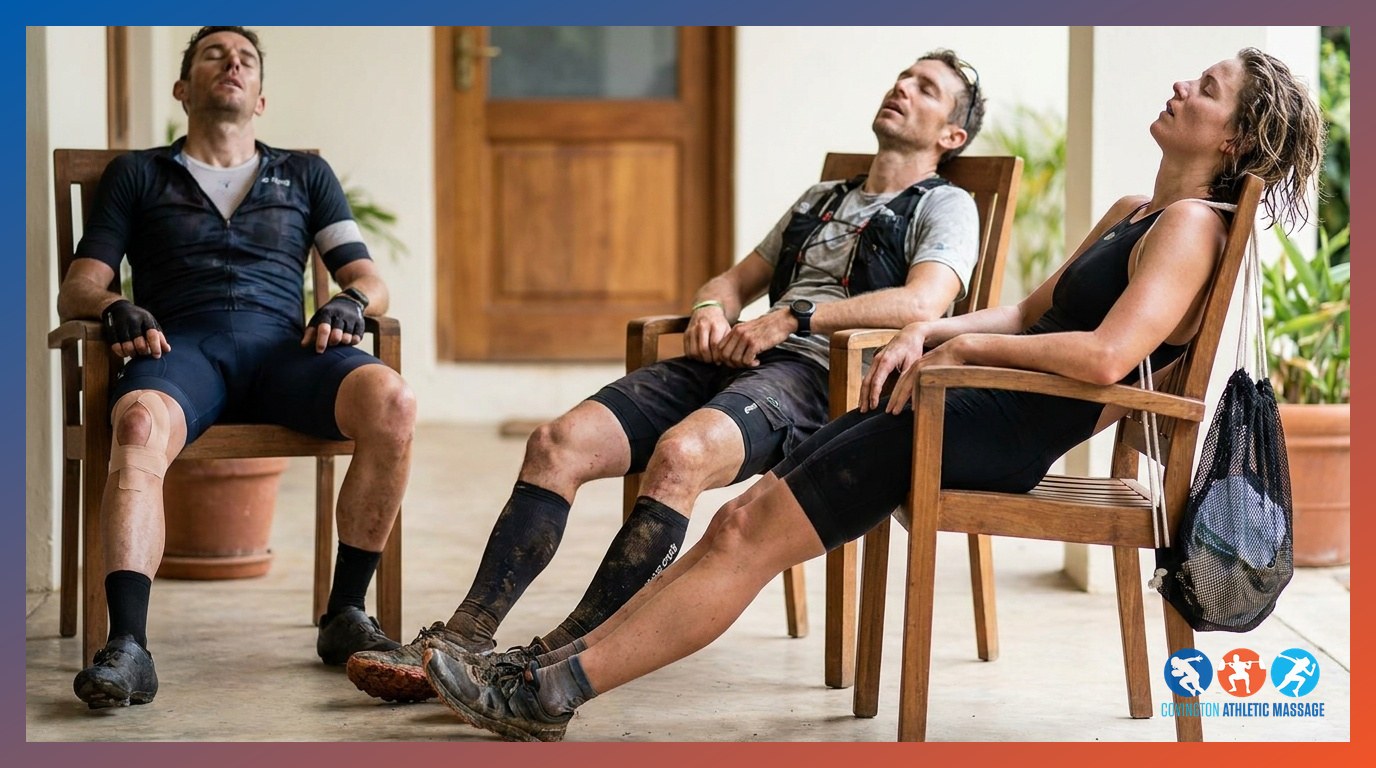
The session fits three situations best. High weekly training volume produces delayed onset muscle soreness, which peaks between 24 and 72 hours after intense exercise according to a 2017 Frontiers in Physiology review. Back-to-back race or event weeks compress recovery windows, and the dedicated post-workout massage session keeps soreness from compounding between starts. Persistent low-grade fatigue without an acute injury signals accumulated load that rest days alone do not clear.
Full body recovery massage applies to athletes in Covington, Georgia across all training disciplines. Runners, gym athletes, cyclists, team sport players, and weekend warriors each load the body differently, so recovery massage for specific sports guides how the therapist sequences the session.
Honest timing matters here. Athletes who wait until they are injured or in acute pain to schedule are misusing full body recovery massage: the session works as a proactive maintenance tool during high training load weeks and cannot function as a reactive rescue after breakdown has already occurred.
Two groups should book a different service. An athlete with an acute injury belongs in Injury Care Massage, which addresses tissue damage directly, while an athlete with one specific pain complaint gets more from Pain Relief Therapy, which concentrates the session on that complaint. Athletes whose fatigue carries a significant psychological or nervous-system component, including burnout, race anxiety, or cortisol-driven tension, should book the Stress Relief & Physical Fatigue Recovery session, the specialised variant of the full body recovery session designed for that presentation.
What does a full body recovery massage session include?
A full body recovery massage session contains deep tissue technique, myofascial release, and targeted compression applied systematically across all major muscle groups. Covington Athletic Massage structures every appointment around an intake assessment, a kinetic chain progression, and pressure depth matched to current training load.
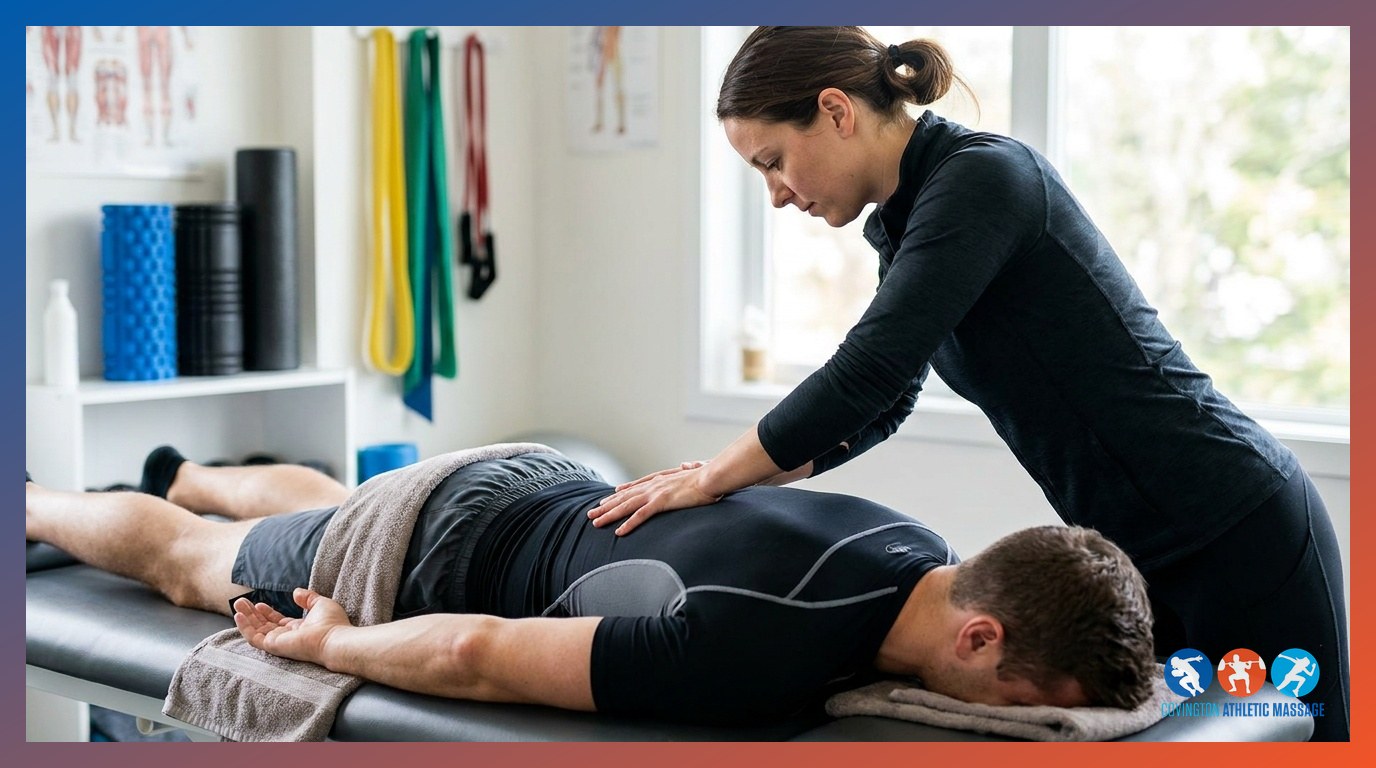
Each session opens with a short intake where the therapist maps the athlete’s training load and identifies soreness areas. That conversation shapes the tailored massage by sport discipline that follows. The therapist then works through major muscle groups in a set sequence, adjusting pressure depth region by region instead of holding one pressure throughout.
The hands-on work combines deep tissue strokes, myofascial release, compression, and cross-fibre friction where the tissue calls for it. Deep tissue carries strong evidence: a 2020 meta-analysis of 47 studies published on ResearchGate found deep tissue massage produced greater pain reduction than Swedish, sports-specific, or myofascial techniques (p = 0.008). When soreness suggests a strain rather than routine fatigue, the soft tissue injury massage explains how treatment changes.
The session addresses the quadriceps, hamstrings, calves, and glutes, the upper back and shoulders, and the anterior chain, covering the full kinetic chain an athlete loads in training.
Timing shapes the result. The 24 to 72 hours after a hard workout is the optimal window for intervening on delayed onset muscle soreness, and athletes booking inside that window find session-specific guidance in the Post-Workout Recovery Massage resource.
Sessions come in 60-minute and 90-minute options. The 60-minute session covers the full chain for routine maintenance, while the 90-minute session suits heavy training blocks or several soreness areas that need slower, repeated passes. The same 2020 ResearchGate meta-analysis linked bi-weekly sessions of 40 to 60 minutes with the most favorable recovery outcomes, so booking the shorter session on a recurring schedule serves most recovery goals better than saving up for one long appointment.
What results can athletes expect from regular full body recovery massage?
Athletes who schedule regular full body recovery massage experience shorter, less intense post-exercise soreness, decreased muscle tightness, and improved range of motion after each session, plus long-term gains in tissue quality, lower minor injury frequency, and sustained training capacity across training blocks.
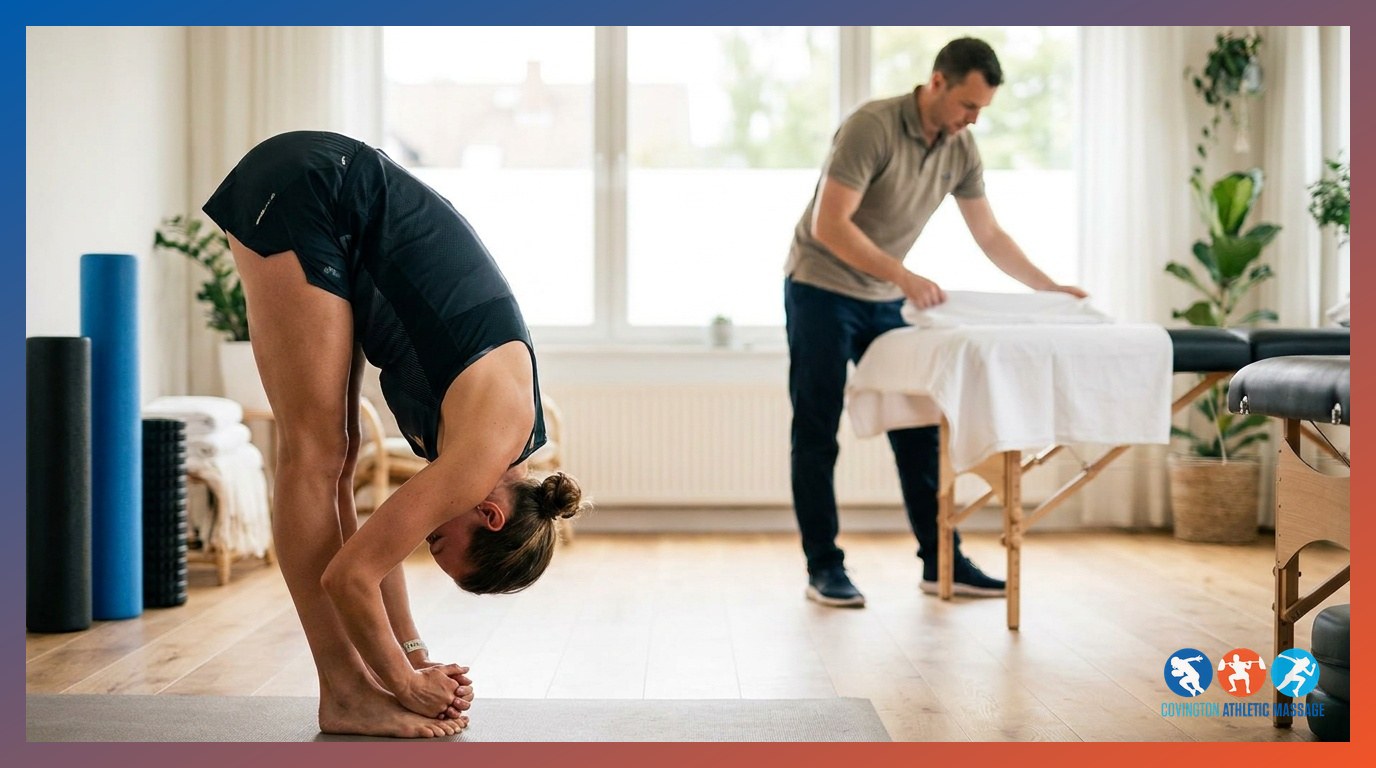
A single session produces acute results within days. A 1994 study in the Journal of Orthopaedic & Sports Physical Therapy found that sports massage administered two hours after eccentric exercise reduced soreness and the muscle damage marker creatine kinase in athletes. A 2020 meta-analysis published on ResearchGate confirmed significant pain reduction and improved range of motion in the days following treatment. For many athletes, restoring range of motion after training stiffness is the first change they notice, because decreased muscle tightness frees joint movement.
The performance-sustaining benefits compound over repeated sessions. Regular full body recovery massage causes reduced DOMS duration, improved tissue quality over time, and sustained training capacity without cumulative breakdown. Each appointment builds on the tissue changes left by the previous one, so consistent scheduling across a training block produces measurably better tissue pliability and a measurable reduction in the frequency of minor injuries, an outcome a one-time session cannot produce.
Massage works inside a broader recovery system, not as a standalone solution. The evidence-based athlete recovery best practices position massage alongside sleep, nutrition, and active recovery, and no session replaces consistent sleep or adequate nutrition.
Frequency should follow training load. Most athletes benefit from weekly sessions during heavy blocks and bi-weekly sessions during base phases; balancing athlete workload with massage timing keeps recovery work proportional to training stress. Full body recovery massage precedes the next training block, functioning as maintenance between sessions rather than a response to injury.
How do athletes in Covington, GA book a full body recovery massage?
Athletes in Covington, GA book a full body recovery massage through Covington Athletic Massage’s online scheduling system, where they select a session length matched to their recovery goals, or by contacting the clinic directly. No medical referral or diagnosis is required for a maintenance recovery session.
The process from first click to first table runs like this:
1. Choose a session length online. Booking a full body recovery massage at Covington Athletic Massage has a straightforward online process with session length options suited to recovery goals, so an athlete picks the duration that fits the current training block. 2. Complete a brief intake at the first visit. The first session opens with a short intake covering training schedule, current soreness, and focus areas, and a maintenance recovery session carries no medical prerequisite. 3. Set a recurring recovery schedule. Athletes who train in repeating cycles can move to regular recovery scheduling, and Athletic Massage Memberships details the membership and multi-session program options built for that cadence.
The full-body recovery massage studio sits in Covington, Georgia, and serves athletes across the surrounding Newton County area. Coaches, training partners, and corporate wellness programs can purchase gift cards for full body recovery massage sessions, and Gift Cards & Corporate Wellness explains how to buy sessions for someone else.
Sources
- Frontiers in Physiology, “The Impact of Various Post-Exercise Interventions on the Relief of Delayed-Onset Muscle Soreness: A Randomized Controlled Trial” (2025)
- ResearchGate, “Effect of Sports Massage on Performance and Recovery: A Systematic Review and Meta-Analysis” (2020)
- Frontiers in Physiology, “Massage Alleviates Delayed Onset Muscle Soreness after Strenuous Exercise: A Systematic Review and Meta-Analysis” (2017)