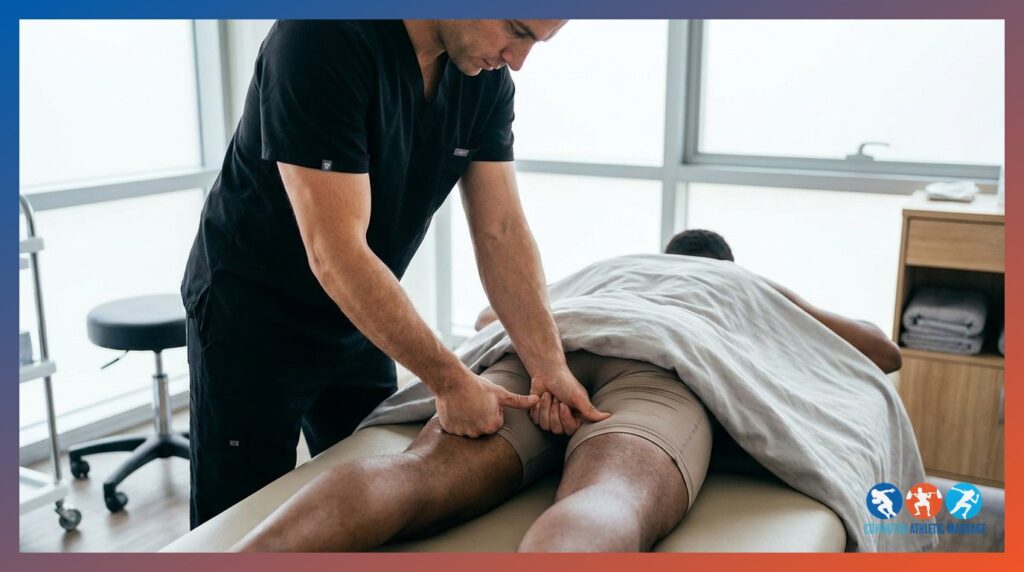
Injury Care Massage at Covington Athletic Massage is a targeted therapeutic service that treats sport-related muscle strains, tendinitis, and soft-tissue injuries for athletes in Covington, Georgia. Rest alone does not repair damaged tissue; injured muscle and tendon fibers need direct manual therapy to heal properly. Covington Athletic Massage structures each Injury Care Massage session to reduce inflammation, restore mobility, and guide athletes back to full activity safely.
What is Injury Care Massage and who is it for?
Injury Care Massage at Covington Athletic Massage is a structured therapeutic service that uses deep tissue and soft-tissue techniques to treat sport-related muscle strains, tendinitis, and soft-tissue injuries. Injury Care Massage serves athletes and active adults in Covington, Georgia who need condition-specific treatment for an injury rather than general relaxation or recovery work.
Primary candidates include competitive athletes, weekend recreational players, runners, lifters, and active adults whose injuries come from training, competition, or repetitive overuse.
Injury Care Massage sessions target muscle strains, tendinitis, and soft-tissue injuries from athletic activity, including:
- Hamstring, calf, and quadriceps strains from sprinting, cutting, and acceleration work
- Achilles tendinitis from running volume and jumping load
- Patellar tendinitis common in basketball, volleyball, and squatting athletes
- Tennis elbow from racquet sports and gripping activities
- Rotator cuff tendinopathy from throwing, swimming, and overhead pressing
Injury Care Massage differs from Pain Relief Therapy and Full Body Recovery Massage because Injury Care Massage targets a specific diagnosed or suspected soft-tissue injury rather than general soreness or systemic fatigue. Pain Relief Therapy addresses everyday muscle tension and non-specific discomfort, while Full Body Recovery Massage addresses whole-body fatigue and maintenance between training blocks. A client with one identifiable injury belongs in Injury Care Massage; a client with diffuse soreness or accumulated training fatigue belongs in one of the other two services. Athletes can match each service to a different stage of training life through the clinic’s athletic injury massage services. Athletes who want detail on the pressure techniques that all three services share can explore deep tissue sports massage in Covington GA.
Athletes with recurring problems, such as a hamstring strain that returns every season, benefit from a multi-session plan rather than single visits. The therapist assesses scar tissue buildup at the first session and designs a session sequence that targets tissue remodeling over time. In-season athletes schedule shorter, more frequent sessions built around practices and games, while off-season athletes commit to longer sessions spaced for deeper tissue remodeling without competition constraints.
What techniques does Injury Care Massage use to treat soft-tissue injuries?
Injury Care Massage at Covington Athletic Massage uses three techniques to treat soft-tissue injuries: deep tissue massage, cross-fiber friction, and myofascial release. Therapists apply deep tissue and cross-fiber friction techniques to damaged muscle fibers and inflamed tendons to reduce adhesions and support tissue remodeling.
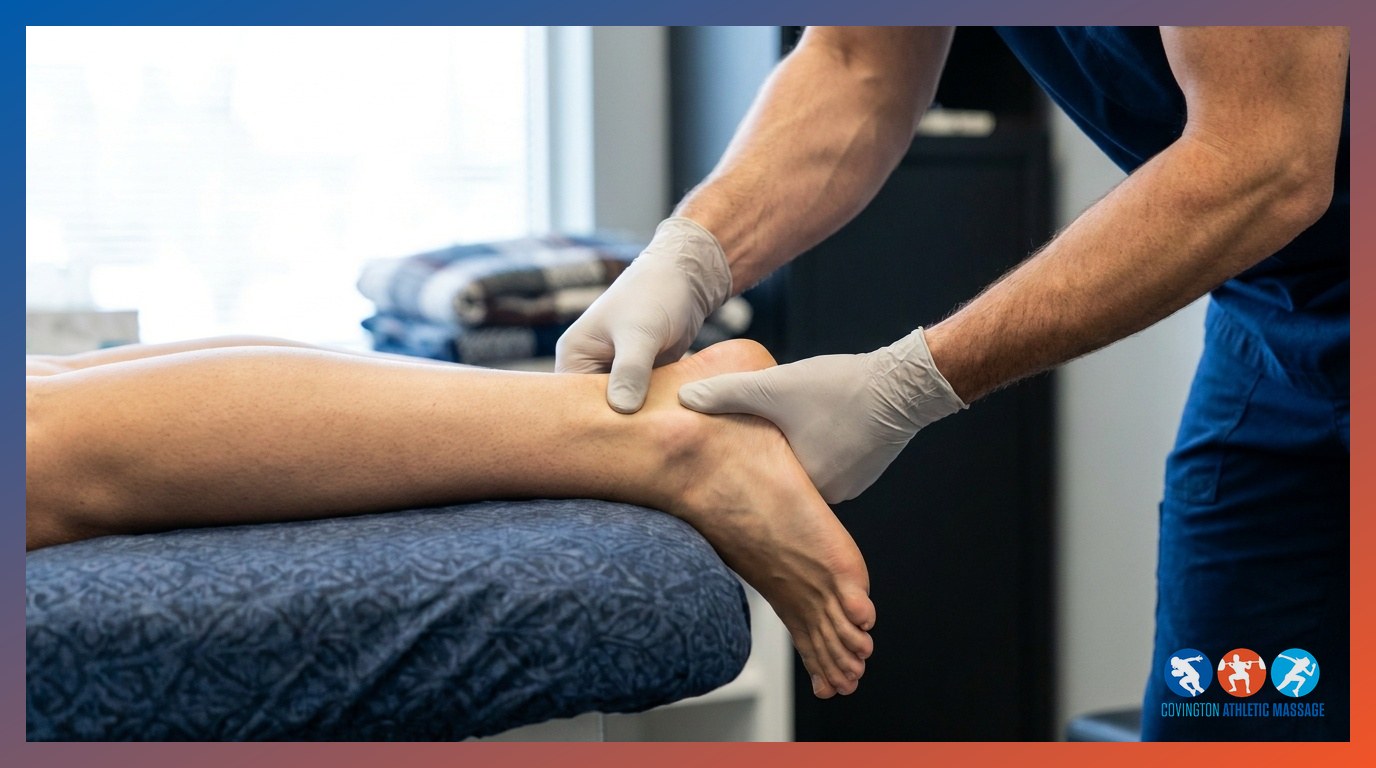
Deep tissue massage treats the muscles surrounding and supporting the injured site. Slow, sustained pressure reduces the compensatory tension that builds when neighboring muscles guard an injury, and that pressure improves circulation to the healing area. The soft-tissue treatment for strains details how this approach applies to pulled hamstrings, quadriceps, and similar muscle injuries.
Cross-fiber friction works directly on adhesions within tendon and muscle fibers. The therapist strokes across the grain of the damaged tissue, breaking down disorganized scar tissue and promoting organized collagen remodeling so repaired fibers align with healthy tissue. The massage treatment for tendinitis explains how friction work targets the inflamed tendon itself.
Myofascial release addresses the fascia, the connective tissue wrapping each muscle. Gentle sustained pressure releases fascial restrictions that limit mobility around the injury site and restores glide between tissue layers.
Timing matters with injured tissue. Direct tissue work delivers the best results after the acute inflammatory phase passes, a minimum of 48 to 72 hours post-injury, when pressure no longer aggravates active swelling. Injury care massage does not replace medical evaluation for acute injuries, and athletes who book within the first 24 hours of a significant injury should seek medical clearance first.
For lower-extremity injuries such as runner’s knee, ankle sprains, and plantar fasciitis, therapists work the surrounding chain: calf, peroneals, and plantar fascia. Treating that chain often produces faster mobility gains than working only at the pain site.
What does an Injury Care Massage session look like at Covington Athletic Massage?
An Injury Care Massage session at Covington Athletic Massage contains an intake assessment, phased pressure application, and a mobility evaluation at close. The therapist treats the muscles surrounding the injury before the injured tissue itself, then confirms progress with a movement recheck.
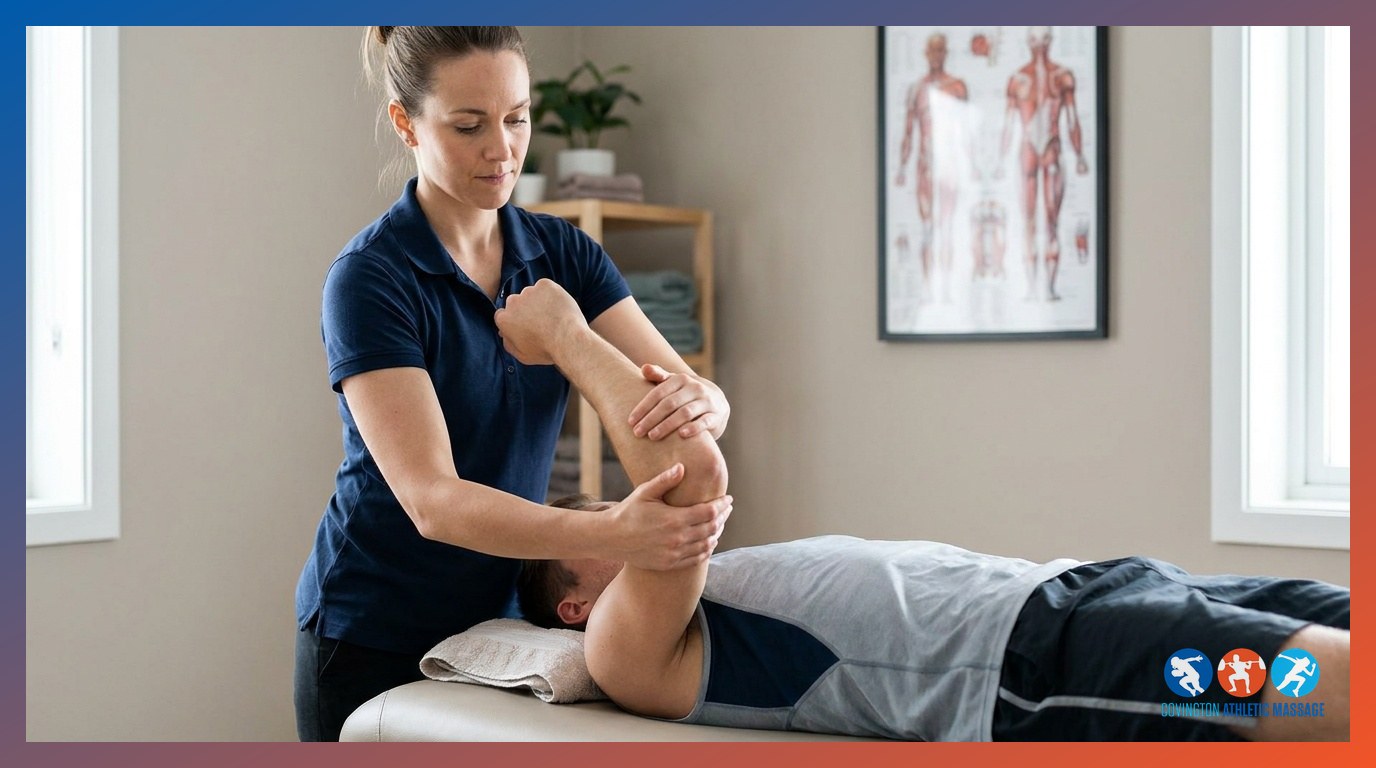
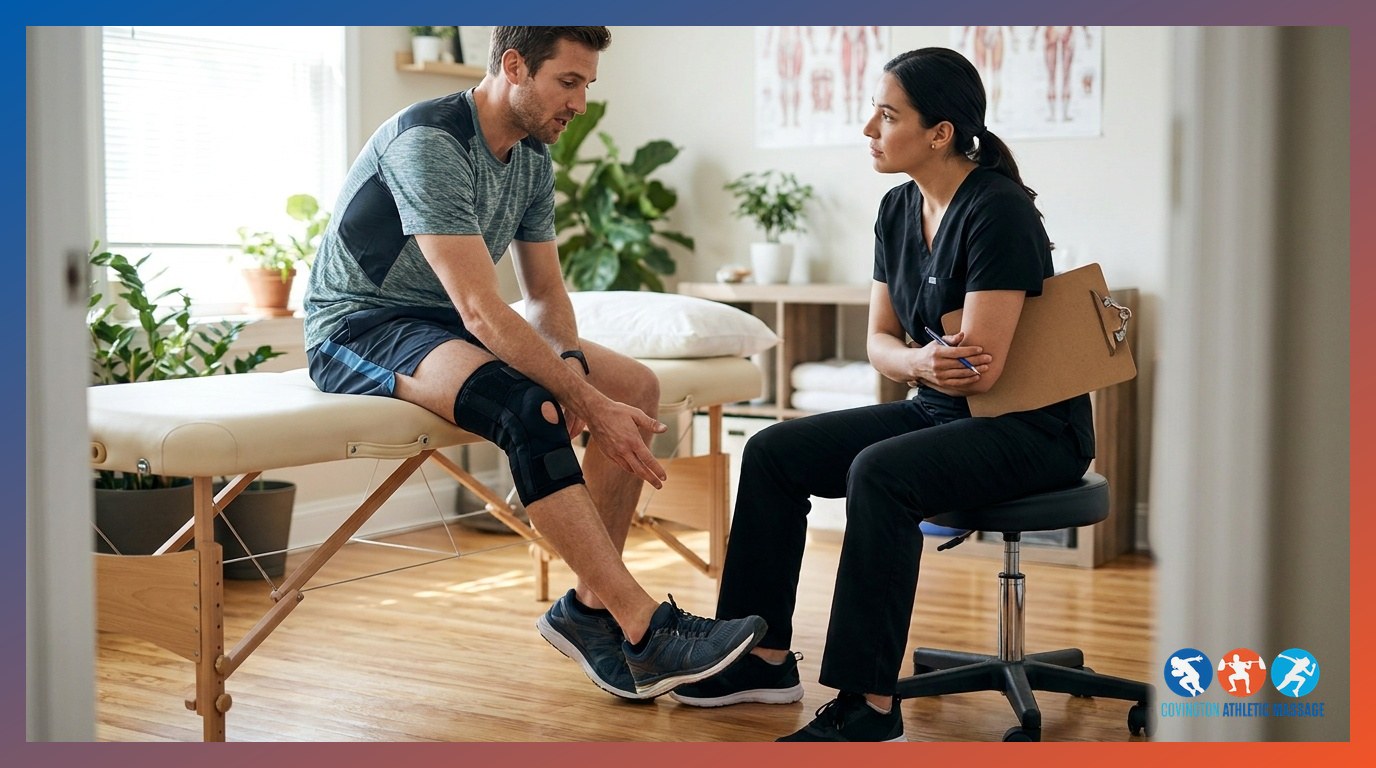
The session opens with an intake assessment. The therapist reviews the athlete’s injury history, the mechanism of injury, the current pain level, and any movement limitations the athlete has noticed. The intake conversation shapes every treatment decision that follows.
Injury Care Massage differs from a standard deep tissue session in one key way: the therapist modulates pressure around the injury site rather than applying pressure uniformly. The proximal and distal musculature receives full-depth work first, which releases compensatory tension without aggravating active inflammation. Athletes with lower-leg injuries find the same phased structure in the knee and ankle soft-tissue care.
Direct work on the injury site comes next. The therapist selects deep tissue, cross-fiber friction, or myofascial technique based on the injury type and the healing phase, so an acute muscle strain receives different treatment than a lingering tendinitis. The massage therapy for foot pain explains how therapists adapt these techniques for plantar and arch injuries.
The session closes with a mobility check that measures what changed. The therapist notes what the athlete should expect over the next 24 to 48 hours, including normal post-session soreness and movements to avoid.
How does Injury Care Massage support return to sport after injury?
Injury Care Massage supports return to sport after injury by restoring tissue quality, joint mobility, and pain-free range of motion so the injured athlete tolerates progressive loading again and gradually advances safely through each stage of the structured rehabilitation process.
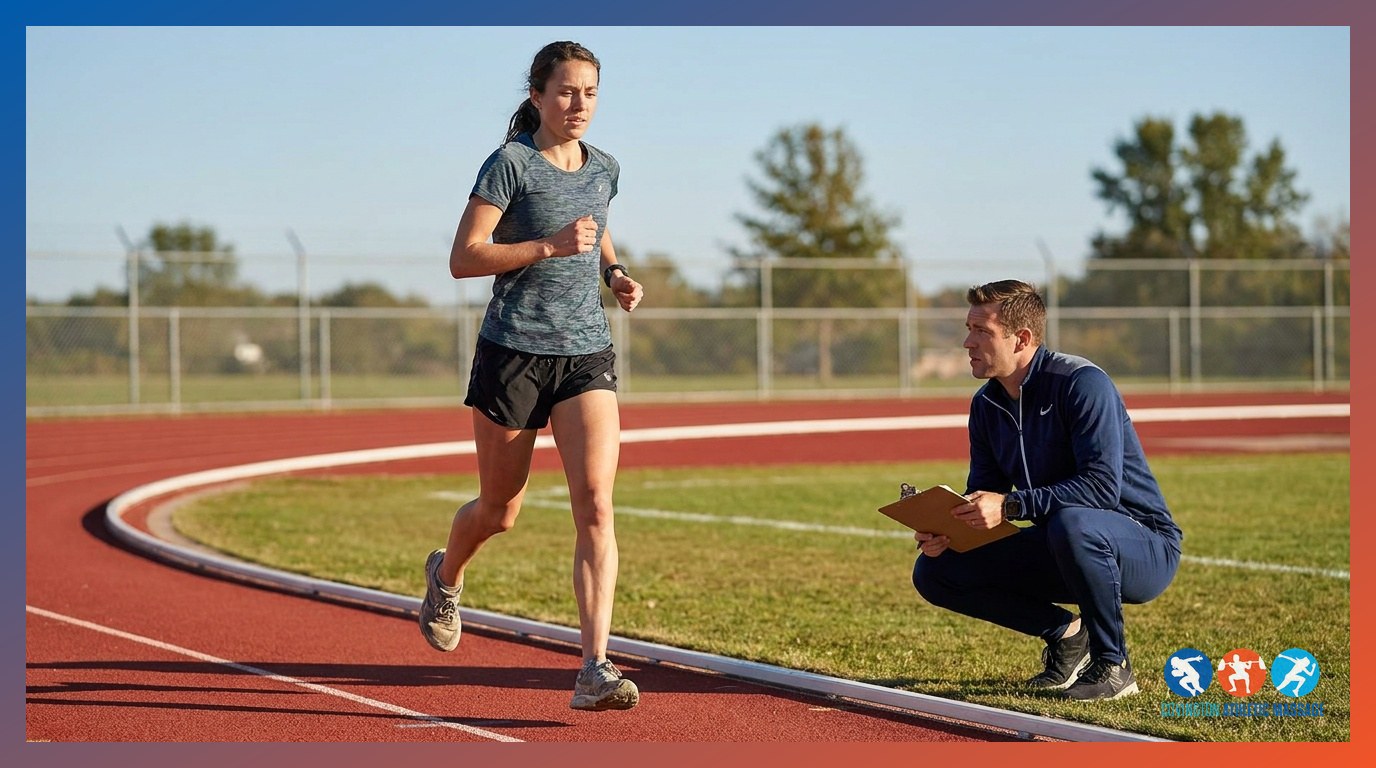
Injury Care Massage functions as one phase in the recovery arc rather than a standalone cure, because the treatment prepares tissue quality for progressive loading. Injury Care Massage precedes Return-to-Activity Massage Support as the next phase in the athlete’s recovery progression.
A typical plan spans multiple sessions, and the post-injury massage progression shifts the focus of each session as tissue heals across the structured stages of injury recovery:
1. Early sessions calm reactive tissue. The therapist reduces muscle guarding and restores pain-free range of motion. Injury care for muscle strains follows an identical order, settling the strain site before deeper work begins. 2. Later sessions prepare tissue for loading. Treatment shifts toward the tissue quality that strength work demands. Injury care for tendinitis targets the tendon and the surrounding musculature at the loading-preparation stage. 3. Resolved symptoms trigger the handoff. When acute injury symptoms settle and the athlete is ready to ramp back into training, care transitions into return-to-activity massage support as the next phase.
Massage care carries one firm limitation. Massage improves tissue quality and mobility, but massage does not replace progressive loading protocols. Athletes with recurring tendinitis often plateau because treatment targets pain rather than load tolerance. Durable resolution pairs massage with a structured reload plan, which the clinic can advise on but does not prescribe. The complete athletic injury prevention guide covers how these phases connect across a full recovery timeline.
How do I book an Injury Care Massage session in Covington, GA?
Athletes book an injury care massage session at Covington Athletic Massage through the online scheduler or by phone, with no physician referral required. Covington Athletic Massage serves athletes in Covington, Georgia seeking injury care massage without a physician referral requirement.
At booking, the athlete shares the injury type, such as a muscle strain or tendinitis, how long ago the injury occurred, and the athlete’s current activity level. The therapist uses these details to plan deep tissue sports massage in Covington GA before the athlete walks in. Covington Athletic Massage treats athletes from across Newton County and the surrounding communities.
For the first session, the athlete wears loose or athletic clothing that gives the therapist access to the injured area, such as shorts for a hamstring strain or a tank top for a shoulder issue. Arriving cold is fine, and the therapist warms the tissue during the session and adapts pressure and technique based on the intake.
Between injury care visits, the athletic massage memberships and programs give athletes a scheduled maintenance option, and the therapeutic pain relief services at Covington Athletic Massage address ongoing muscle discomfort beyond a single injury.