
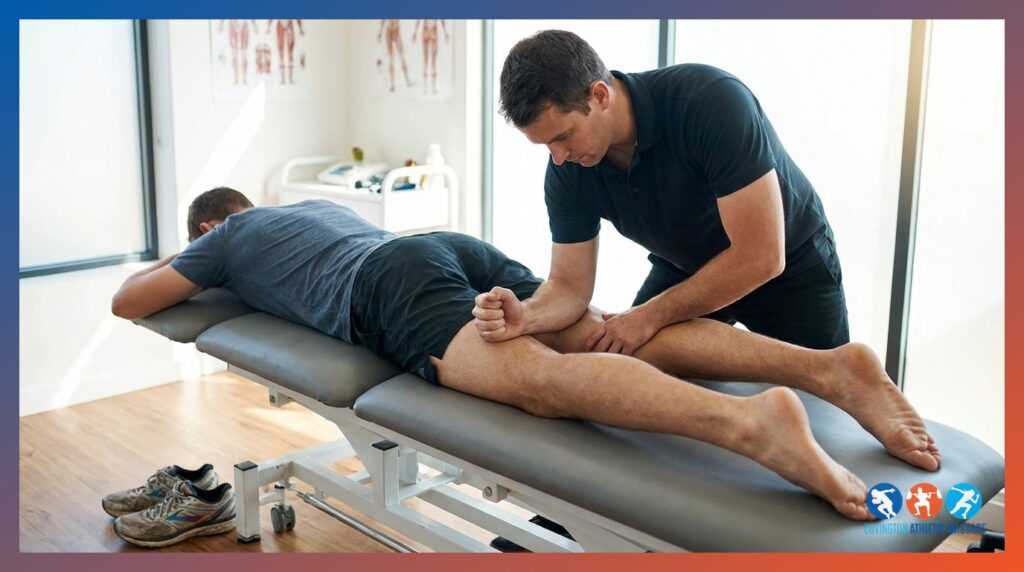
Sports and athletic injuries disrupt training cycles, erode performance, and sideline athletes for weeks or months. Soft-tissue injuries, including muscle strains, tendinitis, ligament sprains, and fascial restrictions, account for most of that lost time. These injuries respond directly to skilled therapeutic intervention. Sports massage reduces injury risk, accelerates tissue repair, and supports a safe return to sport, which makes professional massage care a core pillar of prevention and recovery for athletes in Covington, Georgia, not an optional add-on.
What are sports and athletic injuries?
A sports injury is damage to muscles, tendons, ligaments, fascia, or bone that results from acute trauma or repetitive overuse during athletic activity. Clinicians classify sports injuries by the tissue involved and by the mechanism that caused the damage.
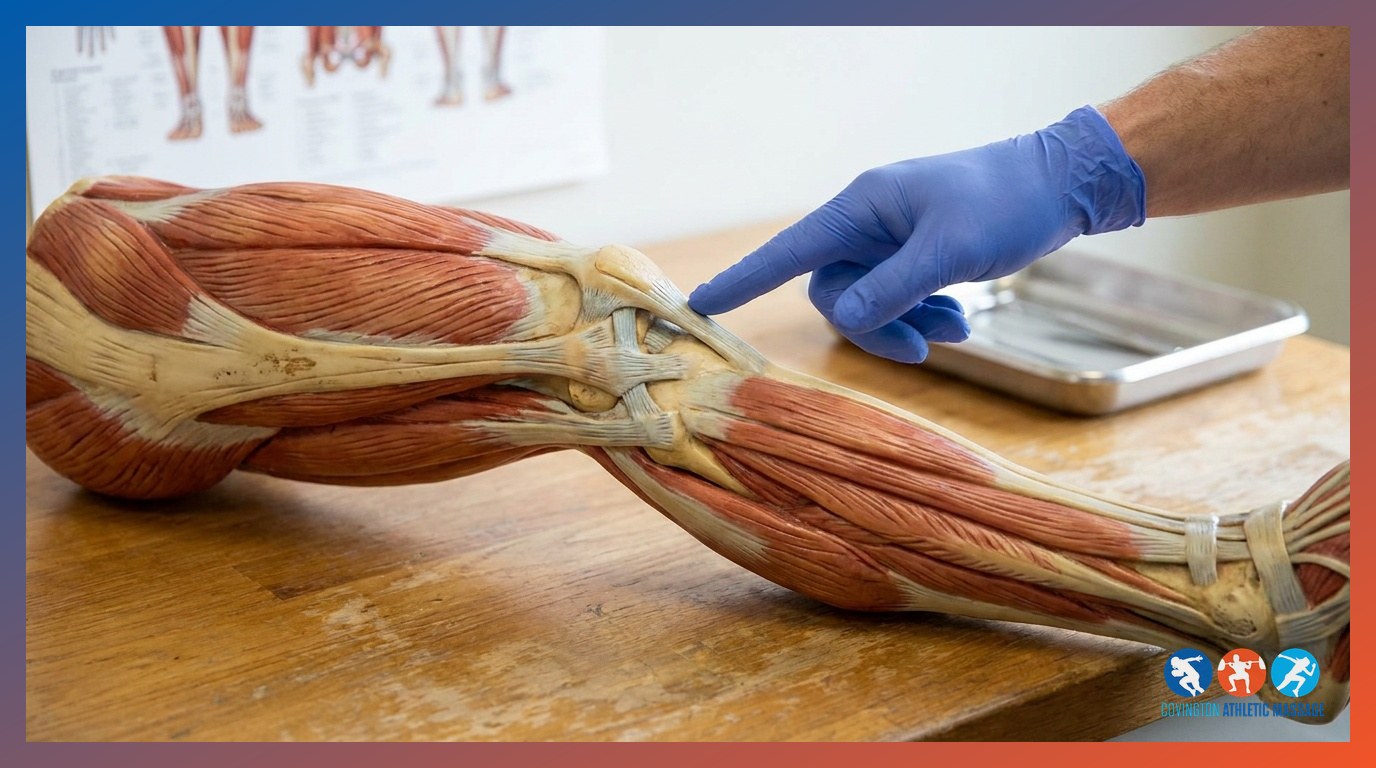
The primary classification divides sports injuries by tissue type into soft-tissue injuries and bone injuries:
- Muscles: strains, which tear muscle fibers, and contusions from direct impact.
- Tendons: tendinopathy and tears at the junction between muscle and bone.
- Ligaments: sprains, which stretch or tear the tissue that stabilizes a joint.
- Fascia: restriction and irritation in the connective tissue surrounding muscles.
- Bone: traumatic fractures and stress fractures.
Grading adds precision within a tissue class. According to IntechOpen (2019), clinicians sort ankle sprains into three grades: Grade I is a mild, incomplete tear of the anterior talofibular ligament (ATFL), Grade II is a moderate, complete tear of the ATFL with or without an incomplete tear of the calcaneofibular ligament (CFL), and Grade III is a severe, complete tear of both the ATFL and the CFL.
The second classification divides sports injuries by mechanism. An acute injury stems from a single identifiable event, such as a collision, a fall, or an awkward landing. An overuse injury develops when cumulative training load exceeds the capacity of the tissue to repair itself between sessions, which produces conditions such as tendinopathy and bone stress reactions.
Recreational and masters athletes in Covington carry comparable or higher injury risk than competitive athletes. Inconsistent training explains the difference: an athlete who sits at a desk all week and then plays one hard weekend game loads cold, underprepared tissue, while a competitive athlete conditions that same tissue through progressive daily work. Age compounds the pattern, because tendons lose elasticity as athletes grow older. Weekend softball players, occasional runners, and once-a-week golfers around Covington often train exactly this way.
Soft-tissue injuries dominate athletic injury statistics because muscle and tendon tissue absorbs the highest forces in sprinting, cutting, jumping, and lifting. The soft-tissue injury types in sport cover strains, sprains, tendinopathies, and fascial restrictions, and soft-tissue injuries respond more directly to massage therapy than any other injury class because massage acts on muscle tone, circulation, and fascial mobility within the damaged tissue itself. Bone injuries follow different rules: a stress fracture requires medical imaging for diagnosis, demands full unloading for healing, and falls outside what massage therapy can treat. An athlete who mistakes a stress fracture for a muscle strain and massages through the pain risks converting a stress reaction into a complete fracture.
What are the most common sports injuries athletes experience?
The most common sports injuries are soft-tissue injuries: muscle strains, tendinitis, ligament sprains, fascial restrictions, and stress-related overuse syndromes. Soft-tissue sports injuries are the dominant category of athletic injuries amenable to massage therapy intervention. Muscle strains, tendinitis, and ligament sprains are caused by a combination of overuse, inadequate recovery, biomechanical load errors, and poor tissue resilience.
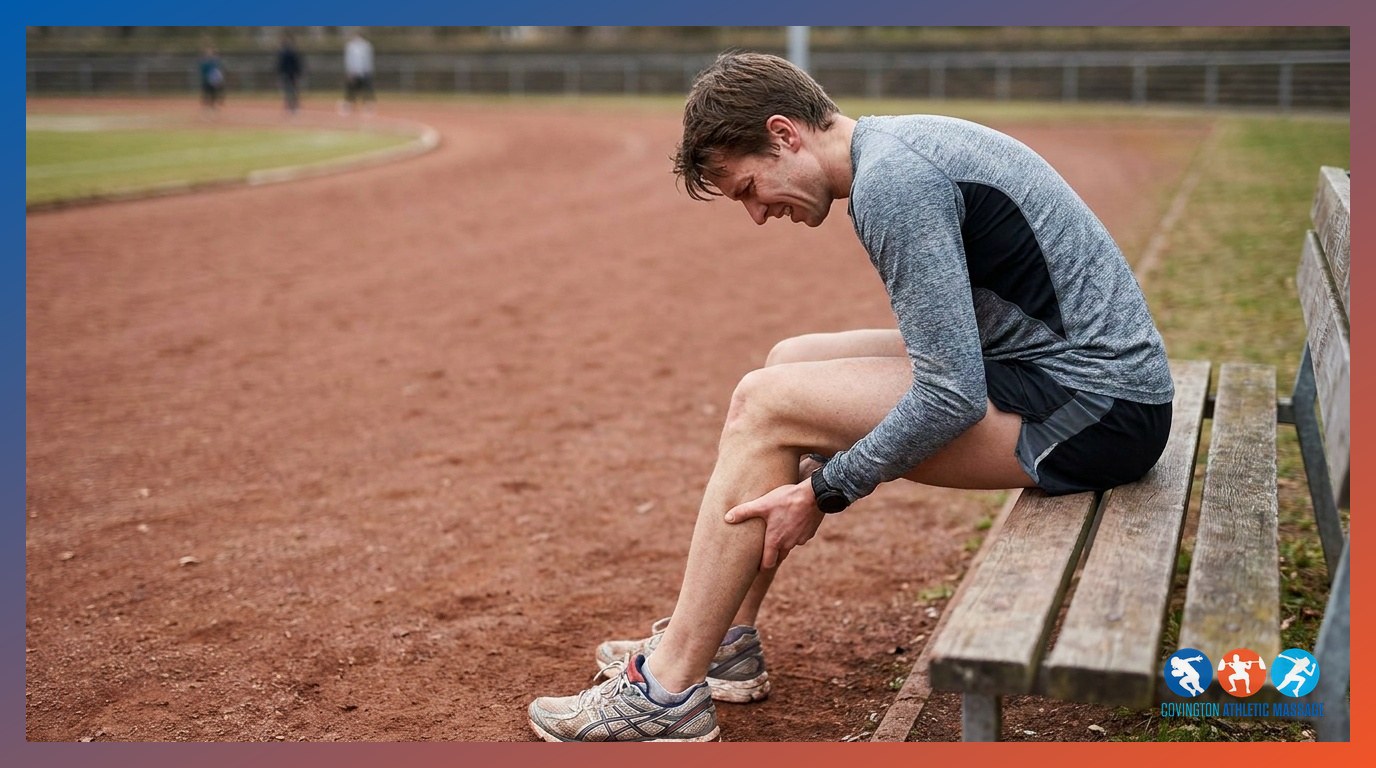
- Muscle strains tear muscle or tendon fibers and are graded I through III, from mild overstretching to complete rupture. Hamstrings, calves, and hip flexors strain most often through overexertion during sprinting or sudden acceleration.
- Tendinitis and tendinopathy break down the Achilles tendon, patellar tendon, or rotator cuff through repetitive overuse and sudden training-load spikes. A 2017 PubMed Central review found most sport-related injuries in young athletes stem from repetitive overuse, not acute trauma.
- Ligament sprains damage ligament tissue, unlike strains, which injure muscle or tendon. The ankle lateral complex and knee MCL sprain most often, graded I through III by fiber damage. According to a 2024 PubMed Central review, the lateral ankle sprain is the most common sports injury, and Colorado Orthopedic Consultants ties up to 80–90% of ankle injuries in active individuals to lateral sprains. Many athletes assume sprains fall outside massage therapy’s scope because ligaments have poor blood supply, yet the surrounding muscle and fascia respond to manual therapy. Guarding muscles around a sprained joint tighten, distort joint mechanics, and delay normal movement; easing that compensatory tension improves joint mechanics during recovery without mobilizing the damaged ligament.
- Fascial restriction and myofascial trigger points build from accumulated micro-trauma, stiffening tissue and restricting range of motion without a single injuring event.
- Stress-related soft-tissue syndromes such as IT band syndrome and plantar fasciitis differ from acute strain because cumulative load, not one event, produces these syndromes. IT band syndrome is frequently misdiagnosed as a knee injury; the syndrome originates at the hip and thigh, and proximal release of the TFL and glute complex outperforms direct compression on the band.
The prevention and recovery across athletic disciplines covers how these categories differ by sport.
How can athletes prevent sports injuries?
Injury prevention contains load management, movement quality, warm-up protocols, and regular soft-tissue maintenance as evidence-based pillars. Athletes apply these four pillars by progressing training volume gradually, screening movement for asymmetries, warming up dynamically, and scheduling sports massage to keep tissue pliable.
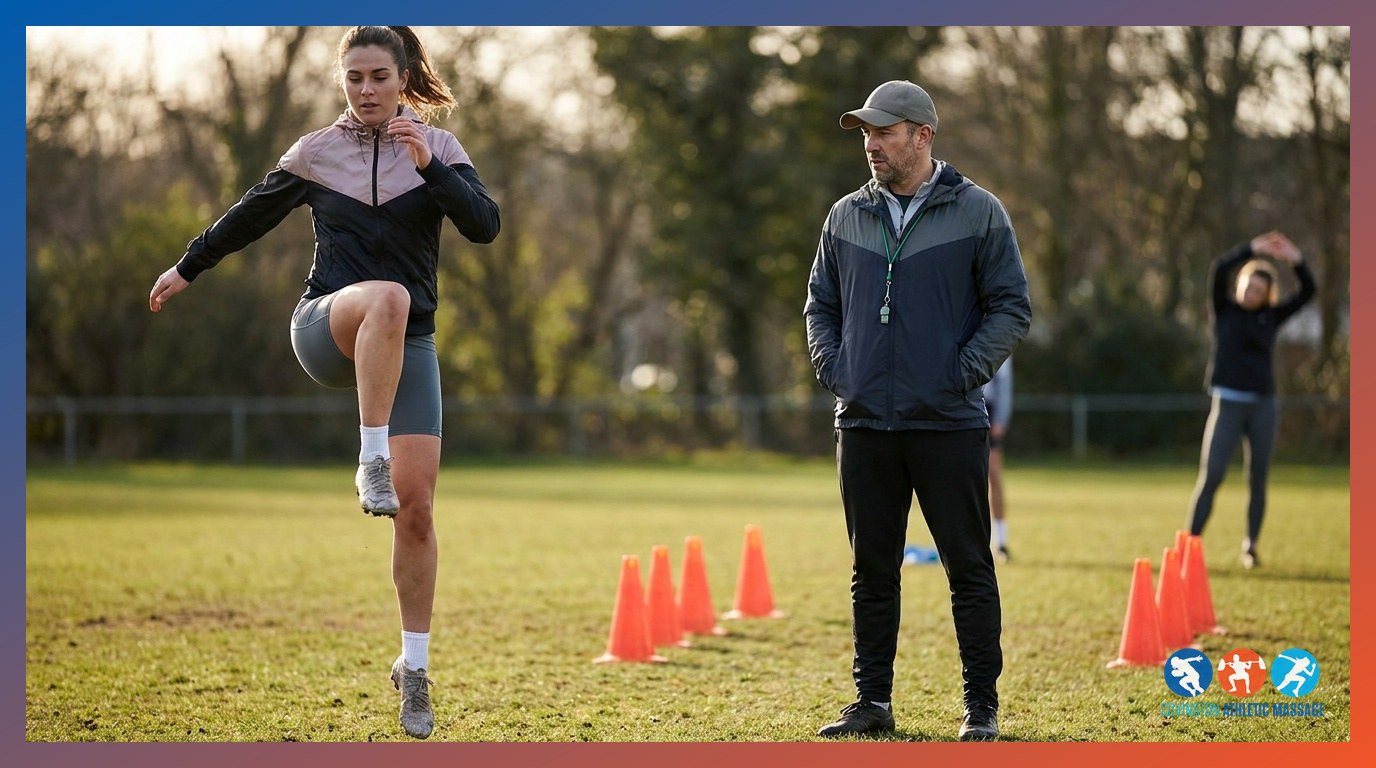
1. Manage training load above all else. Load management, not stretching, is the single highest-evidence injury prevention strategy: training volume and recovery adequacy are the levers that actually move injury incidence, while athletes who rely on aggressive post-workout stretching address the wrong variable. Apply progressive overload, protect rest intervals, and monitor training monotony so weekly volume stays consistent. A 2024 Hospital for Special Surgery study found that each day the acute-to-chronic workload ratio exceeded 1.5 in the prior four weeks, injury risk rose 1.8% among marathon runners, and even a ratio above 1.3 added 0.9% per day. The research-backed athlete injury prevention explains how athletes apply these workload ratios in practice.
2. Screen movement quality. Biomechanical screening identifies asymmetries and compensations, such as a knee collapsing inward during a squat or a stride favoring one hip, before those patterns overload tissue and become injuries. Correcting a compensation early costs far less than rehabbing the strain it eventually causes.
3. Warm up dynamically, not statically. A 2024 meta-analysis in Sport Sciences for Health concluded static stretching cannot decrease all-cause injury in healthy active individuals. According to 2025 research published by PubMed Central, 25 years of evidence links prolonged static stretching to impaired strength and power performance, and holds of 60 seconds or longer inhibit force output and explosive power. Dynamic drills raise tissue temperature and rehearse sport-specific movement patterns instead.
4. Maintain soft tissue with sports massage. Regular sports massage keeps muscle tissue pliable and lets a trained therapist identify adhesions early, when a small restriction is still correctable rather than a strain in progress.
Sleep and nutrition sit upstream. Chronically under-slept athletes carry measurably higher soft-tissue injury rates independent of training load, so recovery habits deserve the same discipline as the workout plan itself.
What role does sports massage play in injury prevention and recovery?
Sports massage serves athletes in two connected phases. In the prevention phase, sports massage reduces tissue vulnerability. In the recovery phase, sports massage accelerates healing, clears metabolic waste, and restores mobility so athletes return to sport on sound tissue.
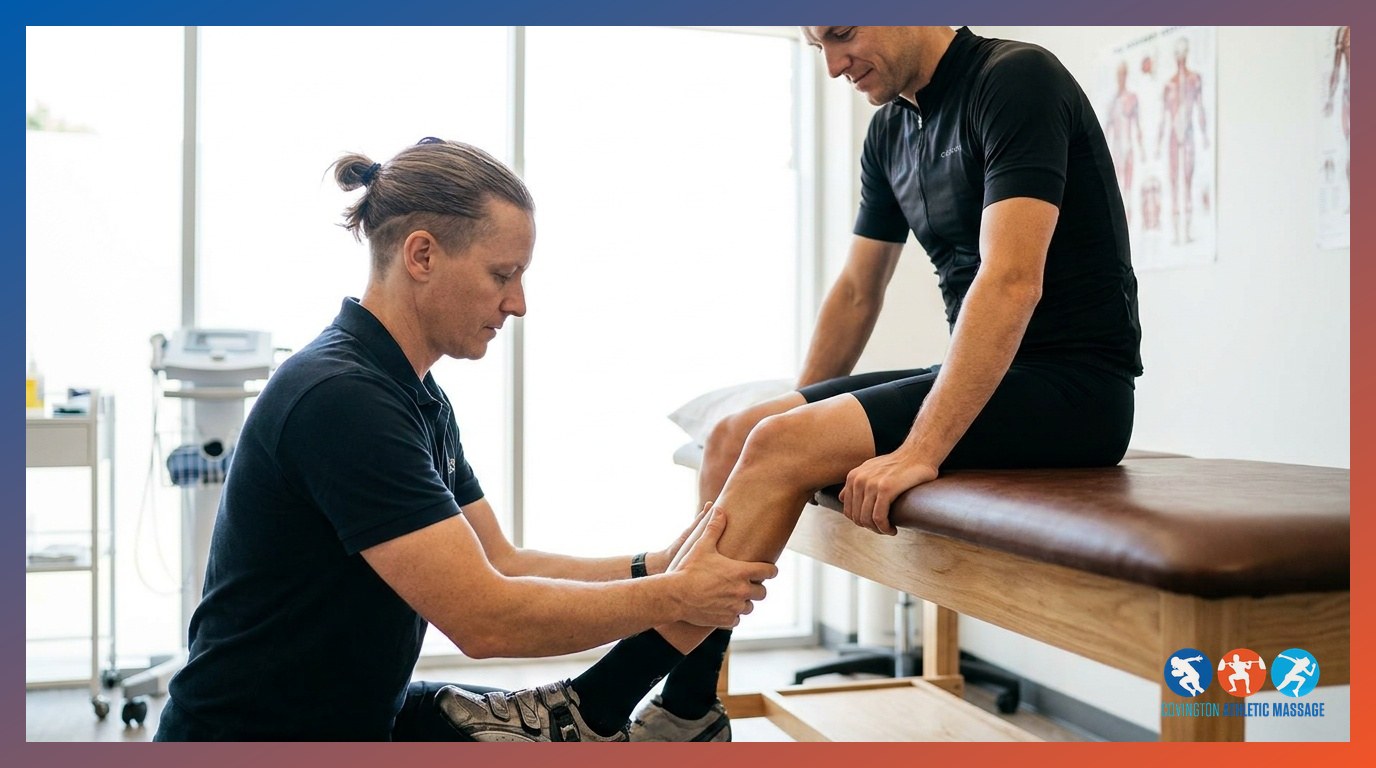
For prevention, sports massage increases local circulation, reduces fascial adhesion, and restores muscle extensibility before training loads push tissue past the injury threshold. Well-perfused, freely lengthening muscle absorbs load; adhered muscle reaches its failure point sooner.
During recovery, sports massage accelerates metabolite clearance and reduces compensatory muscle guarding. A 2024 meta-analysis of 47 studies and 3,284 participants in the IGI Insight Journal found sports massage significantly reduced pain (SMD = −0.87), improved range of motion (SMD = 0.64), and lowered serum creatine kinase (SMD = −0.64). MDPI (2026) reports that massage activates the muscle satellite cells required for tissue repair and regeneration. Drug-free pain control makes sports massage a route to medication-free recovery for athletes.
Most athlete advice splits prevention and recovery into separate topics. The same soft-tissue state, poor tissue quality, restricted fascia, and accumulated load, causes injury and slows healing afterward, so sports massage addresses both ends of one biological problem.
Timing matters. Sports massage is contraindicated during the acute inflammatory phase, the first 48 to 72 hours after injury. A 2024 systematic review of 23 qualifying studies in IGI Insight Active found evidence that sports massage modulates inflammatory responses and promotes optimal scar tissue remodeling in the subacute and remodeling phases.
Consistent massage for athletic injury recovery corrects the tissue state that caused the injury, lowering recurrence risk instead of only settling the current one. The meta-analysis linked bi-weekly 40 to 60 minute sessions with the most favorable outcomes, and deep tissue techniques reduced pain more than Swedish, sports-specific, or myofascial techniques (p = 0.008). In-session trigger point therapy targets the myofascial restrictions that alter movement mechanics and create secondary injury sites, a sharper tool than general effleurage for injury-prone athletes.
How does sports injury recovery work, phase by phase?
Sports injury recovery follows a phase-by-phase continuum from acute protection through tissue remodeling and return to sport. Healing moves through three overlapping phases, each with distinct loading rules, and clearance for play comes from functional benchmarks rather than pain relief alone.
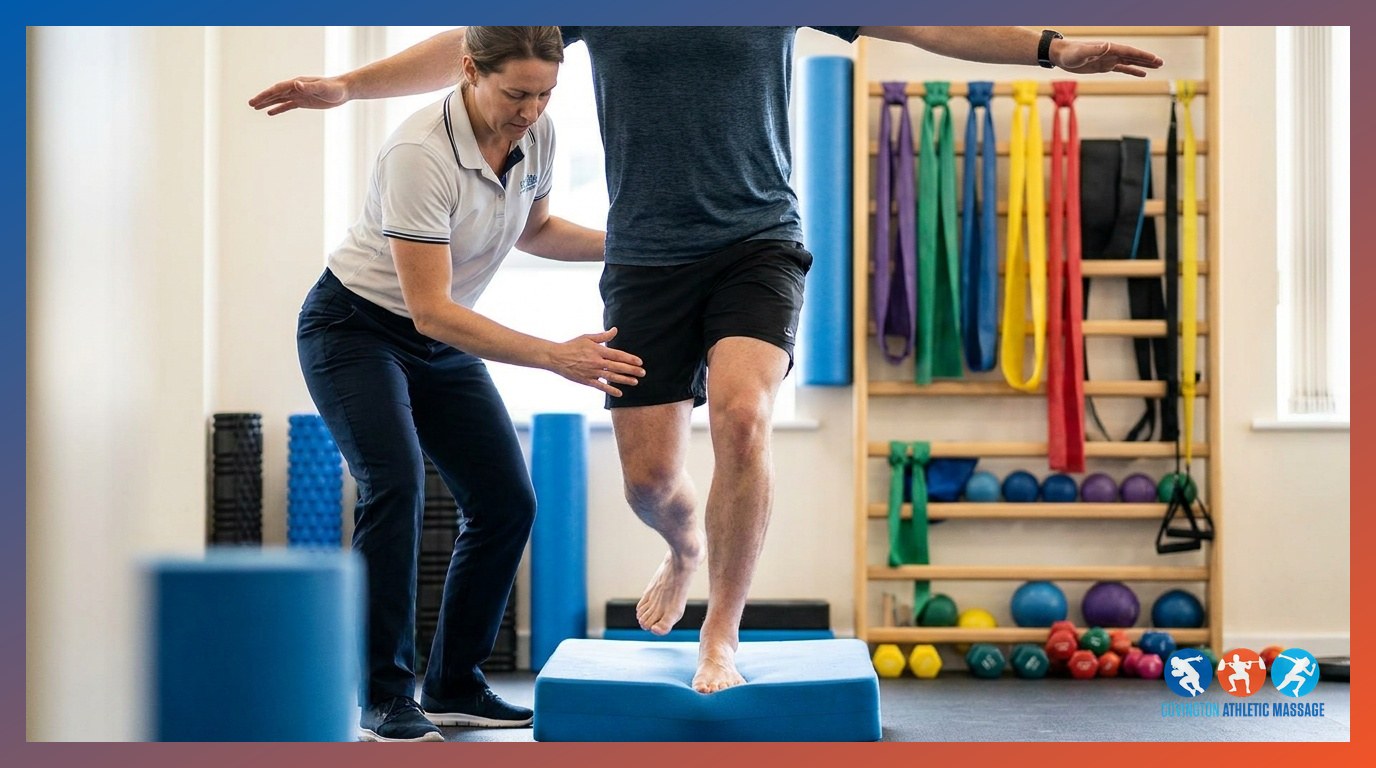
1. Acute phase (0 to 72 hours). The body floods injured tissue with inflammatory fluid, and the goal is protection, relative rest, and reducing that inflammatory load. Massage is not appropriate here. Direct pressure on freshly injured tissue increases bleeding and swelling.
2. Subacute phase (3 to 21 days). Controlled tissue reloading begins as repair cells lay down new fibers. Massage now helps the surrounding musculature by reducing the compensatory tension that builds while the athlete guards the injured area. Deep tissue massage applies to the subacute and remodeling phases of soft-tissue injury recovery, not the acute inflammatory phase.
3. Remodeling phase (3 weeks to several months). Scar tissue organizes along lines of stress, and progressive loading teaches that tissue to tolerate sport demands. Deep tissue massage during this phase prevents adhesion formation and restores full mobility. Athletes frequently return to sport at pain resolution rather than functional restoration, and that gap is the primary driver of re-injury, so this phase should run on progressive loading benchmarks instead of subjective comfort.
4. Return-to-sport phase. Clearance requires strength symmetry between limbs, sound movement quality under fatigue, and tissue resilience under sport-specific load. According to a 2024 review from PubMed Central / NIH, nearly 50% of athletes return within three days of a lateral ankle sprain and 80% within a week despite lingering functional deficiencies, and about 40% of individuals develop chronic ankle instability after a first lateral ankle sprain.
The step-by-step sports injury recovery guide covers phase timelines, loading benchmarks, and massage timing for each stage.
Where can athletes in Covington, Georgia get professional injury care massage?
Covington Athletic Massage provides injury care and prevention massage for athletes in Covington, Georgia through targeted deep tissue and sports massage sessions. The clinic serves athletes and active adults throughout Covington and greater Newton County who need treatment for sports-related soft-tissue injuries.

The clinic’s Injury Care Massage and Pain Relief Therapy services directly address the strains, sprains, and overuse injuries that the sports injury massage hub Covington covers in detail. Injury Care Massage focuses on restoring soft tissue after acute damage, while Pain Relief Therapy addresses the persistent muscle pain that builds across a training season.
Deep tissue technique is the clinic’s primary therapeutic tool, a clinical emphasis that separates Covington Athletic Massage from relaxation-focused providers.
Sources
- Colorado Orthopedic Consultants, “Prevalence, Impact and Long-Term Consequences of Lateral Ankle Sprains”
- PubMed Central / NIH, “Low Ankle-GO Score While Returning to Sport After Lateral Ankle Sprain Leads to a 9-fold Increased Risk of Recurrence: A Two-year Prospective Cohort Study” (2024)
- IntechOpen, “Rehabilitation of Lateral Ankle Sprains in Sports” (2019)
- PubMed Central / NIH, “Epidemiology of Sports-Related Musculoskeletal Injuries in Young Athletes in United States” (2017)
- PubMed Central / NIH, “Increased Regular Season Soft Tissue Injury Rates in National Football League (NFL) Players May Be Associated With the Canceled 2020 NFL Preseason Due to COVID-19” (2022)
- Hospital for Special Surgery, “HSS Study Shows Greater Increases in Training Volume Associated With Higher Risk of Injuries Among Marathon Runners” (2024)
- PubMed Central / NIH, “60-Second Static Stretching of Lower Limb Muscles Disrupts Muscular Performance and Control in Active Male Adults” (2025)
- IGI Insight Journal, “The Effectiveness of Massage Therapy in Treating Sports [Injuries]” (2024)
- MDPI, “Mechanisms and Efficacy of Massage Therapy for Post-Exercise Muscle Repair: A Narrative Review” (2026)
- IGI Insight Active, “Sports Massage for Muscle Injury Rehabilitation” (2024)