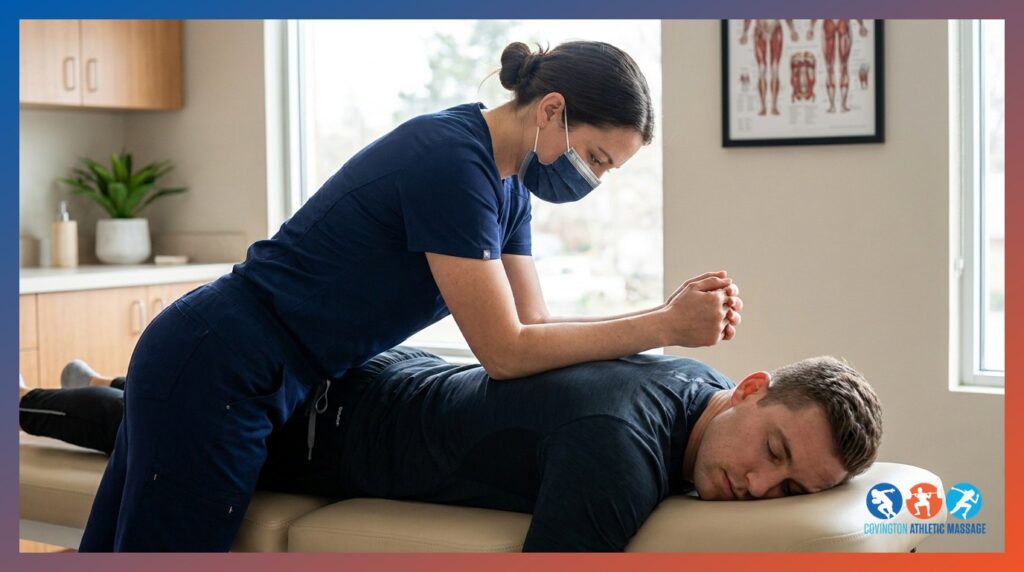
Sports massage is a specialized manual therapy modality that helps athletes prevent injury, accelerate recovery, relieve pain, and sustain performance. Sports massage targets soft-tissue dysfunction through deliberate, technique-specific manual therapy, and research supports its use for competitive and recreational athletes. Covington Athletic Massage provides sports massage at its athletic deep tissue clinic in Covington, Georgia.
What is sports massage, and where did it come from?
Sports massage is a specialized branch of manual therapy applied specifically to athletic and physically active populations. Sports massage uses goal-directed techniques to prevent injury, accelerate recovery, and relieve pain, and sports massage holds a documented history tracing from ancient Greek athletic preparation to formalization in late 19th-century European sport.
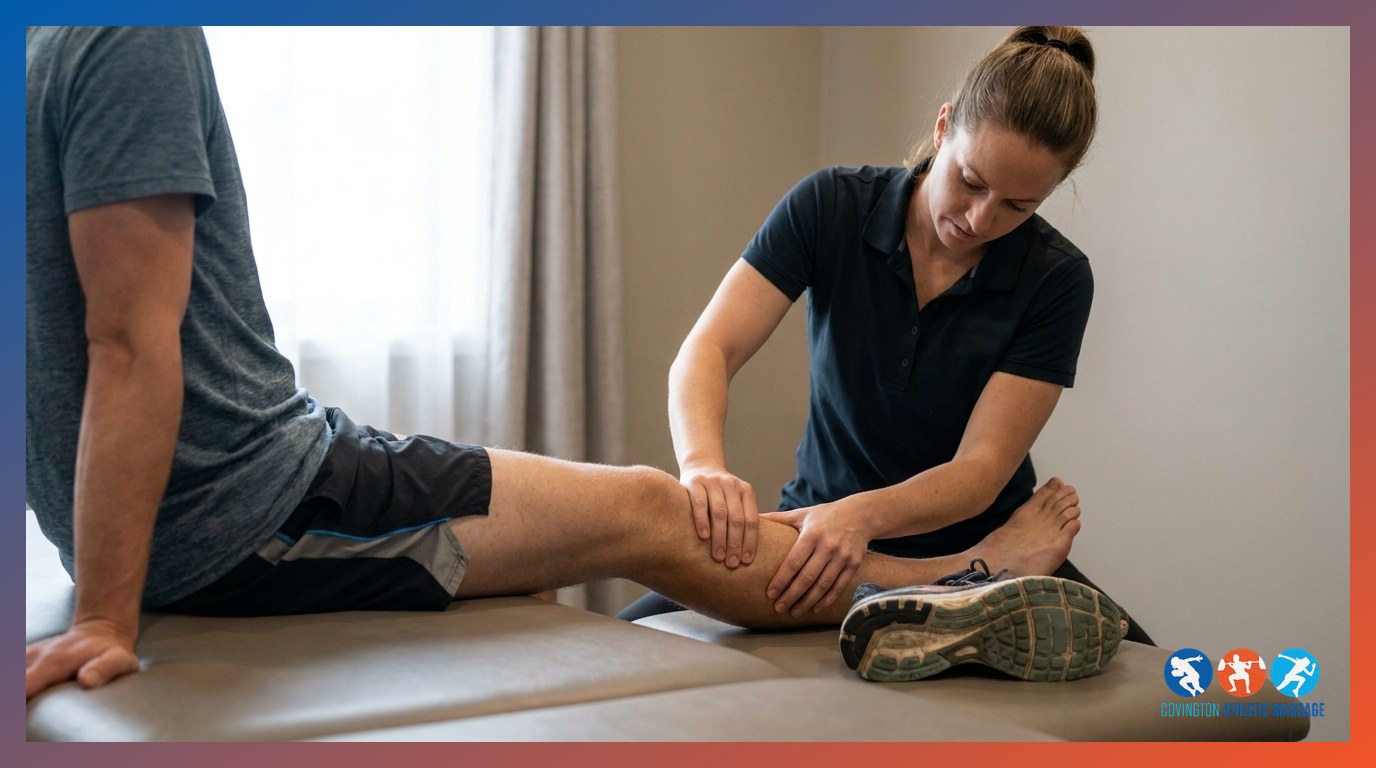
What separates sports massage from relaxation massage is intent. A relaxation session pursues general stress relief, while a sports massage therapist selects techniques based on the athlete’s sport, position in the training cycle, and recovery goal. The sports massage defined for athletes explains how this goal-directed selection shapes every session, from pre-event preparation to post-competition recovery work.
Sports massage operates within manual therapy, delivered by trained massage therapists with athlete-specific training. Sports massage is a physical intervention with documented therapeutic effects, not a medical procedure, and the physiological basis of sports massage documents those effects at the tissue level. Sports massage also differs from physical therapy and chiropractic care: sports massage does not diagnose conditions, manipulate joints, or replace medical treatment. The modality works as a soft-tissue intervention that complements clinical care.
The recorded history of sports massage runs through two modern threads. Scandinavian athletic programs produced the first formal system, while Soviet sports institutes built a parallel research-driven tradition, and both threads fed Olympic and professional adoption across the 20th century.
- 5th century BC: Organized sports medicine originated in ancient Greece and Rome, with efforts to reduce injury risk most notably associated with Greek physicians Herodicus and Galen, according to Dunbar Medical (2022).
- Ancient Greece: Athletes received special therapeutic treatments from servants called aliptae, who worked to minimize exhaustion and tone muscles before and after competition, serving as predecessors to athletic trainers, the Moab Times reported in 2023.
- Circa 1900: The Finnish School of Massage, originating from the Swedish Massage system, developed the first system of sports massage, according to Massage Therapy Wiki (2018).
- 1924: Finnish runner Paavo Nurmi won five gold medals at the Paris Olympic Games, including the 1,500m and 5,000m with only a 30-minute gap between events, and credited special massage treatment as one of the most important components of his training program (Massage School Notes, 2014).
- 1924 to 1930: Dr. I.M. Sarkisov-Sirasini formulated the basic concepts of Russian Sports Massage and began teaching at the Central Institute of Physical Therapy in Moscow; by 1950, Russian athletes competing internationally received strong government support for sports massage (Massage School Notes, 2014).
- Cold War era: Soviet sports institutes embedded massage therapists in teams, assigned therapists to specific sports, trained therapists in documented protocols, and sent therapists with squads to world championships and Olympics, according to Genesis Career Education (2026).
- 1972: Lasse Viren’s performance at the Munich Olympics drew serious attention from American programs, and American coaches examining the Finnish program found consistent sports massage integrated throughout training cycles (Genesis Career Education, 2026).
What techniques are used in sports massage and what does each one do?
Sports massage techniques contain effleurage, petrissage, friction, tapotement, and trigger point release, each serving distinct physiological purposes. Myofascial release completes the core toolkit. Therapists select and sequence these techniques based on the session goal, the athlete’s tissue condition, and the phase of training.
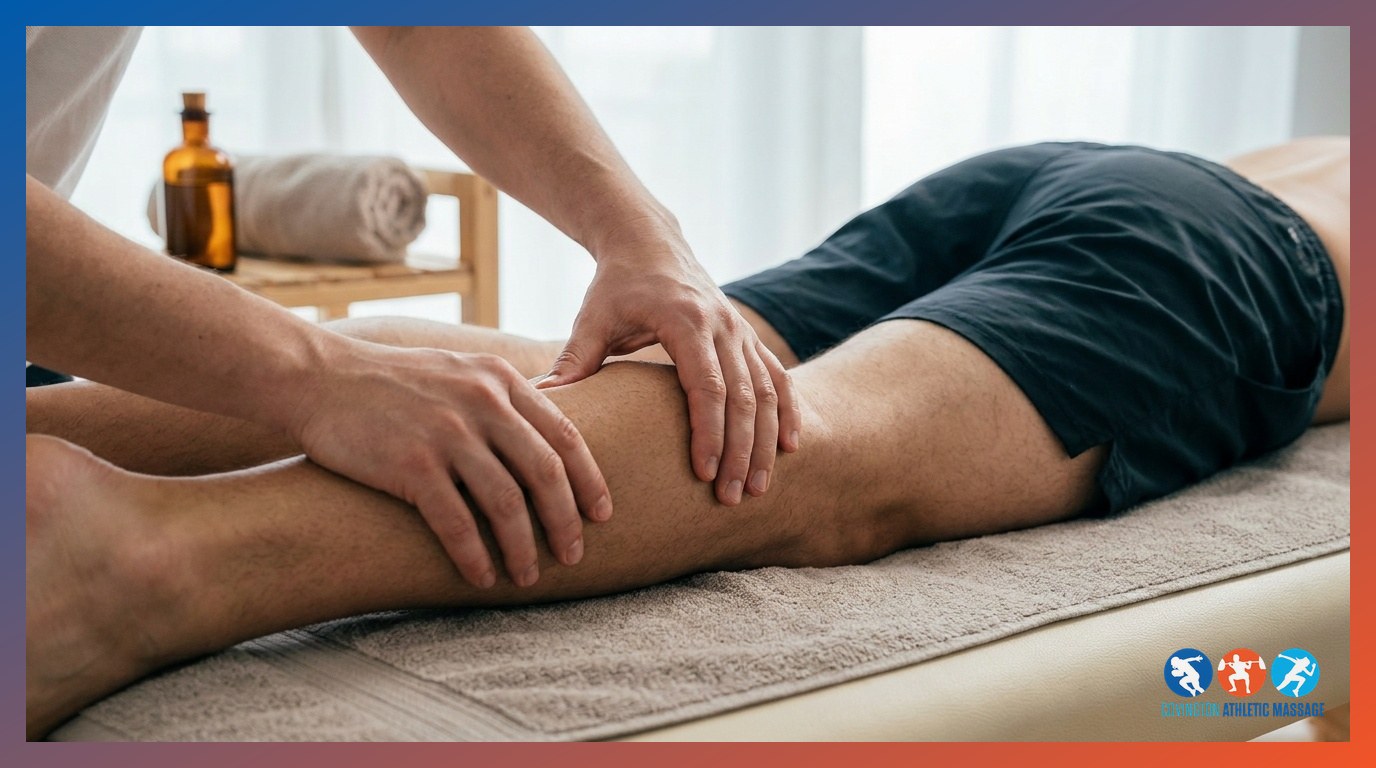
Effleurage uses long gliding strokes along the muscle fibers to open circulation, assess tissue tone, and transition between techniques, and effleurage typically begins and ends every session. Petrissage follows with kneading and compression of the muscle belly, mobilizing metabolic waste, reducing fascial adhesions, and improving tissue pliability. Both strokes also rank among the core techniques used in deep tissue work, which adapts the same toolkit to chronic tension patterns.
Friction applies transverse or circular pressure to tendons, ligaments, and scar tissue, breaking down adhesions and stimulating collagen remodeling. Tapotement uses rhythmic percussive striking to stimulate neuromuscular activation, so therapists reserve tapotement for pre-event sessions; tapotement is contraindicated after competition and on acute injuries.
Trigger point release applies sustained ischemic compression to hyperirritable muscle knots, interrupting the pain-spasm-pain cycle and restoring the muscle’s resting length. Myofascial release applies slow, sustained traction to connective tissue, releasing fascial restrictions that limit range of motion and create compensatory movement patterns.
Sports massage is not a single standardized technique. Sports massage is a goal-directed session structure, and the therapist assembles techniques around the athlete’s phase of training, injury status, and current tissue state. A pre-event session and a rehabilitation session may share almost no techniques despite both being called sports massage.
A common misconception holds that harder pressure always produces more benefit. The neurological mechanism works the other way: excessive pressure triggers a protective guarding response that increases muscle tone instead of reducing it. Skilled therapists modulate pressure to stay below that threshold, so a firm session never becomes something the client braces against. A 2026 ResearchGate review describes how massage activates mechanoreceptors and large-diameter afferent fibers, suppressing pain signaling at the dorsal horn through gate-control mechanisms while enhancing microvascular perfusion and lymphatic clearance of prostaglandins, bradykinin, and hydrogen ions.
The evidence base for sports massage has strengthened considerably through the 2010s and 2020s. Systematic reviews behind the current clinical evidence on sports massage show consistent support for reduced delayed-onset muscle soreness (DOMS), short-term flexibility improvement, and psychological recovery, while evidence for direct performance enhancement remains more mixed. According to a 2024 meta-analysis on ResearchGate, massage effects on DOMS peaked 48 to 72 hours after treatment with a standardized mean difference up to −1.51, deep tissue work produced greater pain reduction than Swedish or other techniques (p = 0.008), and bi-weekly protocols of 40 to 60 minute sessions were associated with the most favorable outcomes.
When Should Athletes Get a Sports Massage: Before or After an Event?
Sports massage applies to four distinct timing contexts: pre-event, post-event, maintenance, and rehabilitation. Athletes benefit from sessions both before and after competition. Pre-event massage primes the body for output, post-event massage accelerates recovery, and the athlete’s immediate goal determines the right choice.
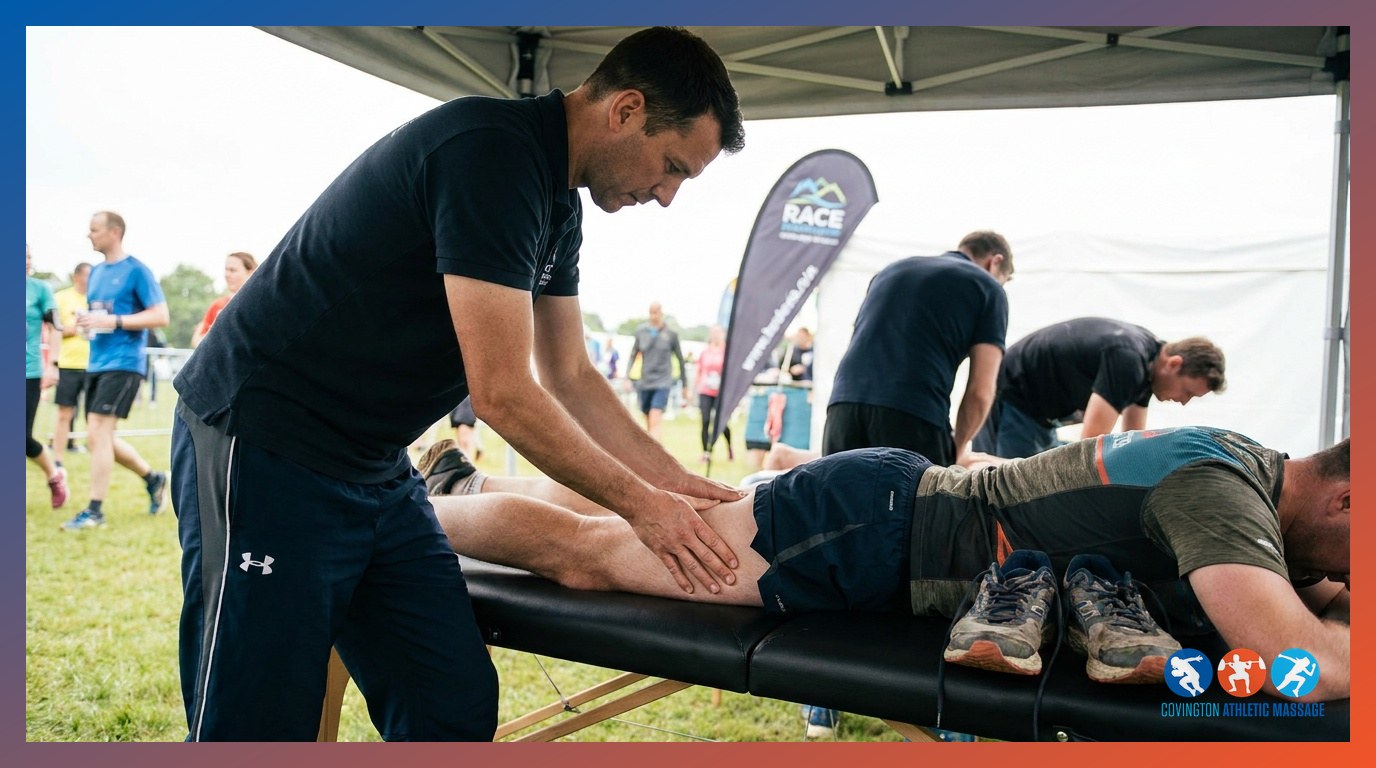
Pre-event massage takes place 15 to 45 minutes before competition. The therapist uses shorter, faster, stimulating strokes to increase circulation and neuromuscular readiness. Pre-event work does not aim to relax tissue deeply. Deep relaxation blunts neuromuscular reactivity and reduces power output, so the session avoids the parasympathetic sedation that would impair performance.
Post-event massage occurs within 24 to 72 hours after competition. Delayed-onset muscle soreness commonly appears 24 to 72 hours after eccentric exercise, according to a 2026 ResearchGate report, so this window targets flushing metabolic byproducts, reducing acute inflammation, and initiating tissue recovery. A 2017 meta-analysis of 11 randomized controlled trials with 504 participants, published in Frontiers in Physiology, found massage significantly reduced muscle soreness at 24, 48, and 72 hours. The first 24 hours call for light lymphatic-style effleurage rather than deep pressure, because deep work on acutely inflamed tissue can exacerbate microtrauma inflammation. Pressure then progresses deeper as soreness subsides.
Maintenance massage happens between training cycles and allows the deepest work. The therapist targets chronic tension, fascial restrictions, and compensatory patterns before they accumulate into injury. Maintenance is the highest-value session type for performance longevity.
Rehabilitation massage supports injured athletes during recovery. The therapist modifies technique, working around injured tissue first and then progressively into the injured area, maintaining surrounding mobility, preventing atrophy of adjacent structures, and supporting return to activity.
Athletes mapping these four contexts across a season can follow the recovery timing strategies for serious athletes, which align session type and pressure with each training phase.
Which Athletes Benefit Most from Sports Massage?
Sports massage is used by endurance athletes, strength athletes, team sport athletes, and recreational active adults, each with different session priorities, because every training population loads tissue differently and gains measurable recovery and injury-prevention benefit from structured soft tissue work. Muscle injuries such as strains, contusions, and delayed-onset muscle soreness account for up to half of all sports injuries, according to a 2024 ResearchGate publication, which is why nearly every training population gains something from structured soft tissue work.
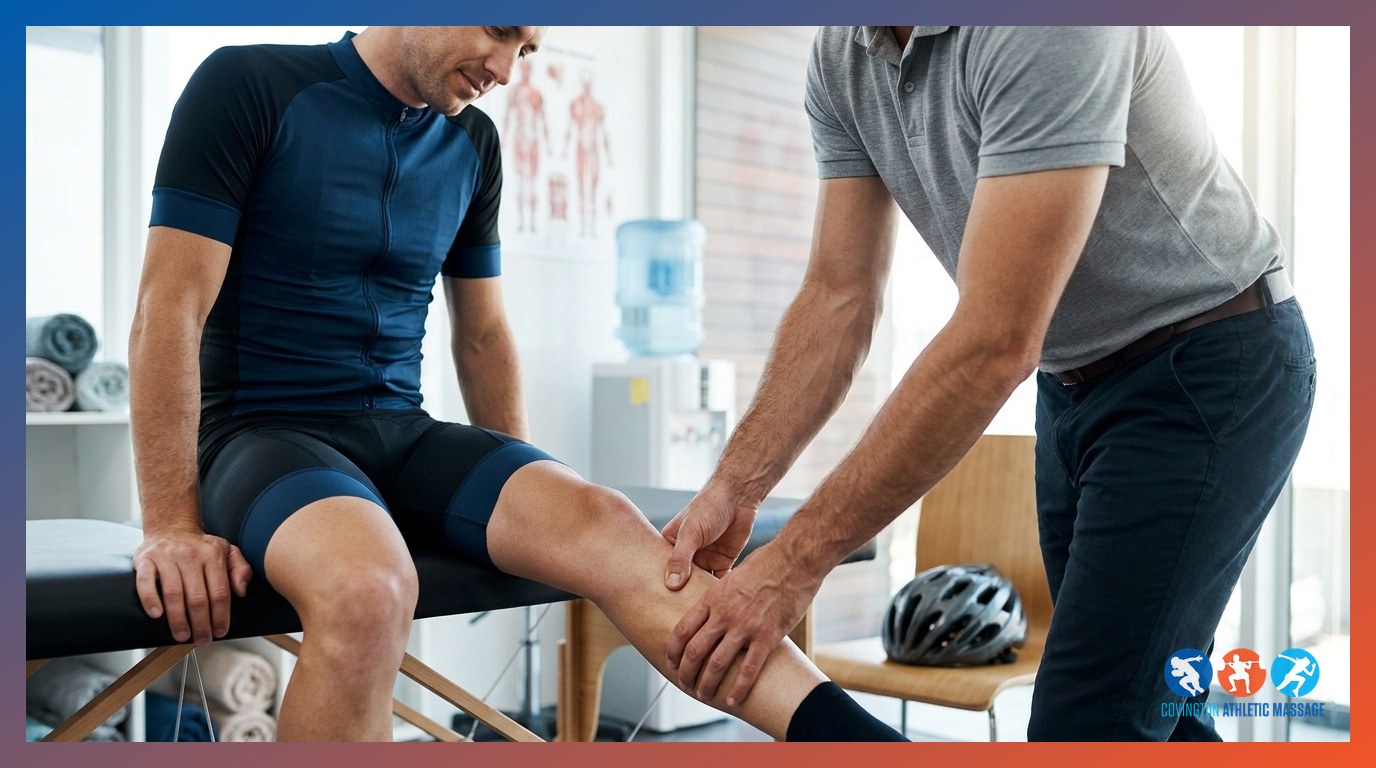
Endurance athletes and strength athletes require structurally different sports massage session priorities: runners, cyclists, and triathletes need sustained myofascial release that addresses cumulative tissue restriction from repetitive-use fascial thickening, IT band tension, and postural compensation patterns, while weightlifters, CrossFit athletes, and football players need localized trigger point work and cross-fiber friction that addresses acute muscle belly density and attachment-point stress.
Team and court sport athletes, including soccer, basketball, and tennis players, load their bodies in multi-directional patterns on frequent competition schedules. These athletes benefit from a mix of regular maintenance sessions and rapid post-event recovery work. The athlete-focused massage benefit analysis breaks down how session priorities shift across sport calendars.
Recreational and masters athletes often carry a training load plus occupational and postural dysfunction from desk work or physically demanding jobs, and sports massage addresses both in the same session. Youth athletes form a distinct sub-population with more reactive tissue that responds quickly to treatment. Older masters athletes present the opposite tissue profile and need longer warm-up phases and more conservative pressure progression.
Athletes returning from injury use sports massage as one component of a structured rehabilitation timeline, never as a standalone treatment. The clinic coordinates with physical therapy or medical care when a presentation calls for coordination, and the professional athlete massage therapy approach follows that same coordinated model.
How is sports massage different from regular massage?
Sports massage is distinct from Swedish massage and general relaxation massage in intent, pressure depth, technique selection, and outcome targets. Sports massage pursues measurable athletic outcomes: restored function, injury prevention, and accelerated recovery. Relaxation massage pursues comfort and general stress relief.
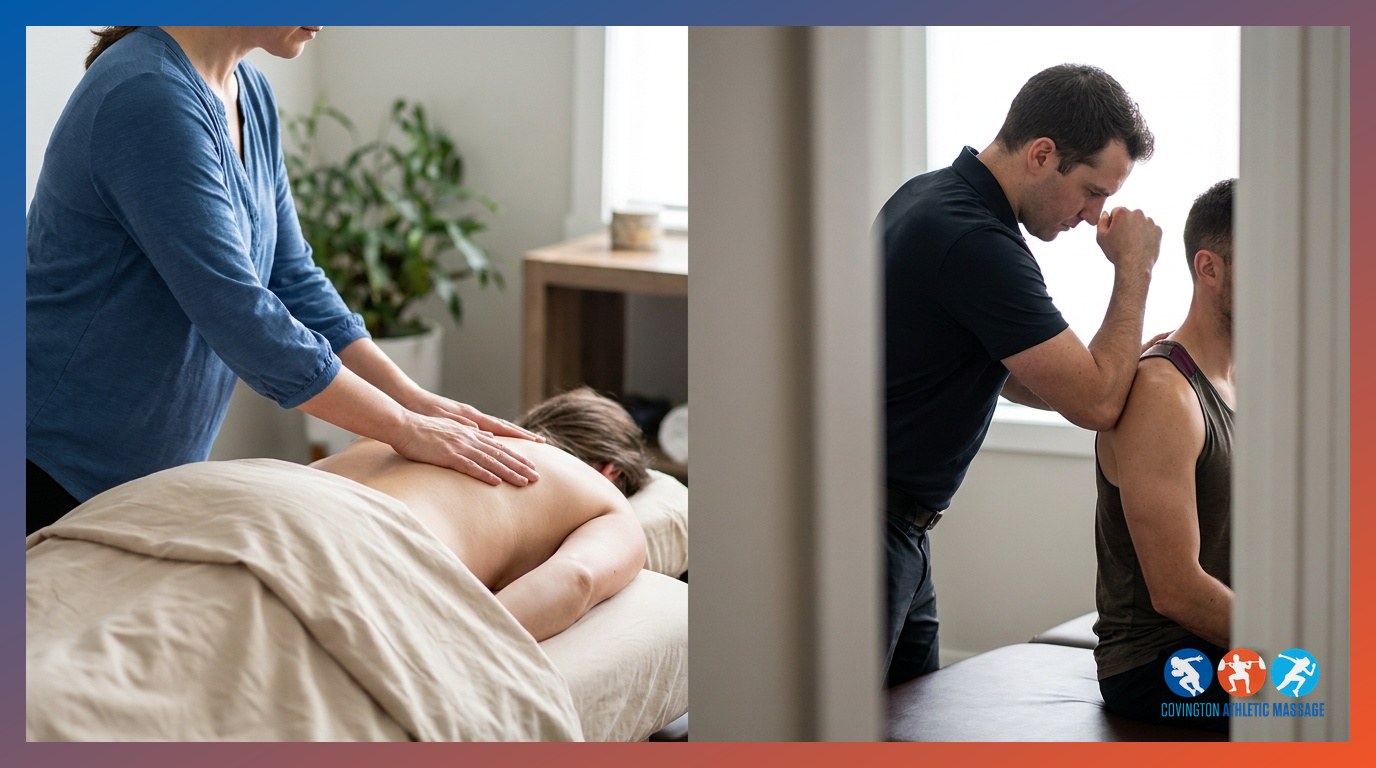
1. Intent drives every decision. Sports massage is outcome-targeted, aiming to restore function, prevent injury, and accelerate recovery, while Swedish and relaxation massage are comfort-targeted. According to a 2024 ResearchGate systematic review and meta-analysis of 47 studies with 3,284 participants, massage therapy significantly reduced pain (SMD = −0.87) and improved range of motion (SMD = 0.64) compared with control, exactly the kind of measurable outcomes a sports session is built around.
2. Pressure and technique run deeper. A sports massage therapist applies deeper, more specific pressure and draws on a broader toolkit than a standard relaxation session, including slow sustained strokes, cross-fiber friction, and targeted trigger point work.
3. Anatomical focus is structural. The sports massage therapist assesses and treats specific structures, such as tendons, muscle attachments, and fascial planes, rather than working only toward global tension reduction.
4. Session structure follows assessment. A sports massage session begins with a tissue assessment, and the therapist adapts pressure, technique, and treatment area based on what the tissue shows, not on a fixed routine.
Deep tissue massage is a technique frequently used within a sports massage session, but the two terms are not synonymous. Sports massage is a purpose-defined modality; deep tissue is a pressure-and-method descriptor.
The common athlete questions about massage cover related practical concerns such as session timing around training and expected post-session soreness.
What can athletes at Covington Athletic Massage expect from a sports massage session?
A sports massage session at Covington Athletic Massage opens with a brief functional assessment of training load, pain points, and goals, followed by deep tissue sports massage with sustained pressure matched to the athlete’s tissue state that day.
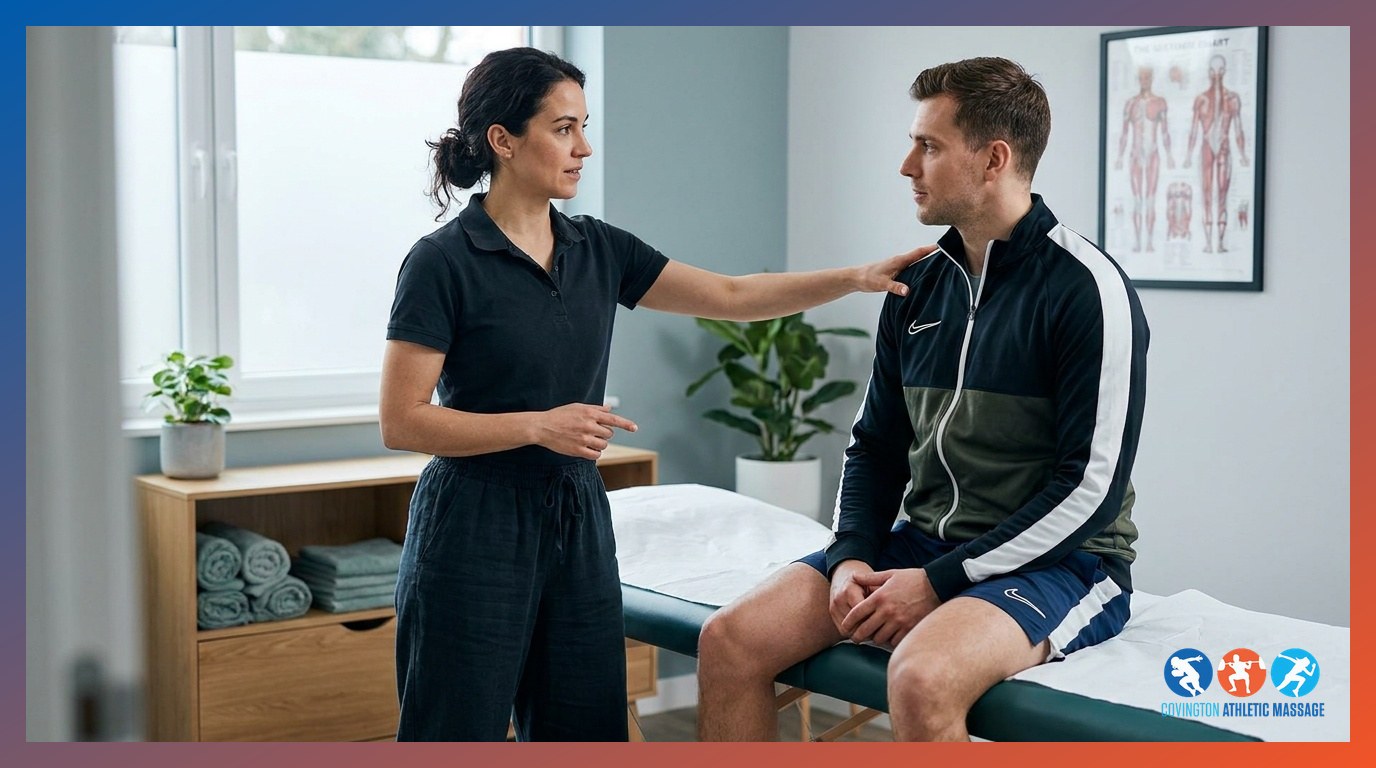
Covington Athletic Massage applies sports massage through a deep tissue athletic framework serving athletes and active adults in Covington, Georgia. Every appointment begins with a short conversation about current training load, recent soreness, and the goal for the visit. That conversation tells the therapist where the athlete’s tissue needs work, so hands-on time goes to those areas. Assessment takes minutes.
The hands-on work uses sustained pressure and a specific technique sequence matched to the athlete’s tissue state, whether the tissue is pre-event fresh, post-competition fatigued, or guarding around an old injury. Covington Athletic Massage details the pressure progression and sequencing behind the deep tissue services in Covington on the deep tissue massage in covington ga page.
Athletes book one of four session types, all grounded in sports massage principles: injury care, pain relief, full body recovery, and mobility restoration. A marathoner logging high mileage and a weekend golfer with a tight back both fit the same framework; only the pressure plan changes.
Covington Athletic Massage treats competitive and recreational athletes across the Newton County area. Athletes who train year-round can book recurring sessions through athletic massage memberships and programs. Sports massage matches pressure and technique to an athlete’s current training, so a first appointment follows the same assessment and pressure-matching process as any other session.
Sources
- Moab Times, “Body and Soul: History of Massage, Part Two” (2023)
- Dunbar Medical, “History of Sports Medicine Starting from the Ancient World” (2022)
- Massage Therapy Wiki, “History of Sports Massage | Massage Therapy Wiki” (2018)
- Massage School Notes, “History of Sports Massage – Massage School Notes” (2014)
- Genesis Career Education, “The Athlete’s Secret: How Professional Sports Teams Started Using Massage Therapists” (2026)
- ResearchGate, “Effect of Sports Massage on Performance and Recovery: A Systematic Review and Meta-Analysis” (2024)
- ResearchGate, “Sports Massage or Active Exercise for DOMS Relief? A Systematic Review and Meta-Analysis” (2026)