Active adults and athletes relieve athletic pain effectively without over-the-counter or prescription medication. Natural pain management combines sports massage, manual therapy, targeted movement, heat, and nutrition, and each method addresses pain through a distinct physiological pathway. Natural pain relief methods deliver meaningful relief without the systemic side effects that concern athletes who rely on medication long term. Athletes in Covington, Georgia can access the full spectrum of natural pain relief through Covington Athletic Massage.
Why do athletes look for pain relief options beyond medication?
Athletes look beyond medication because NSAIDs mask pain without correcting its mechanical causes, prolonged NSAID use threatens the gut, heart, and healing tissue, and athletic goals demand restored function rather than suppressed symptoms. Drug-free care targets the cause.
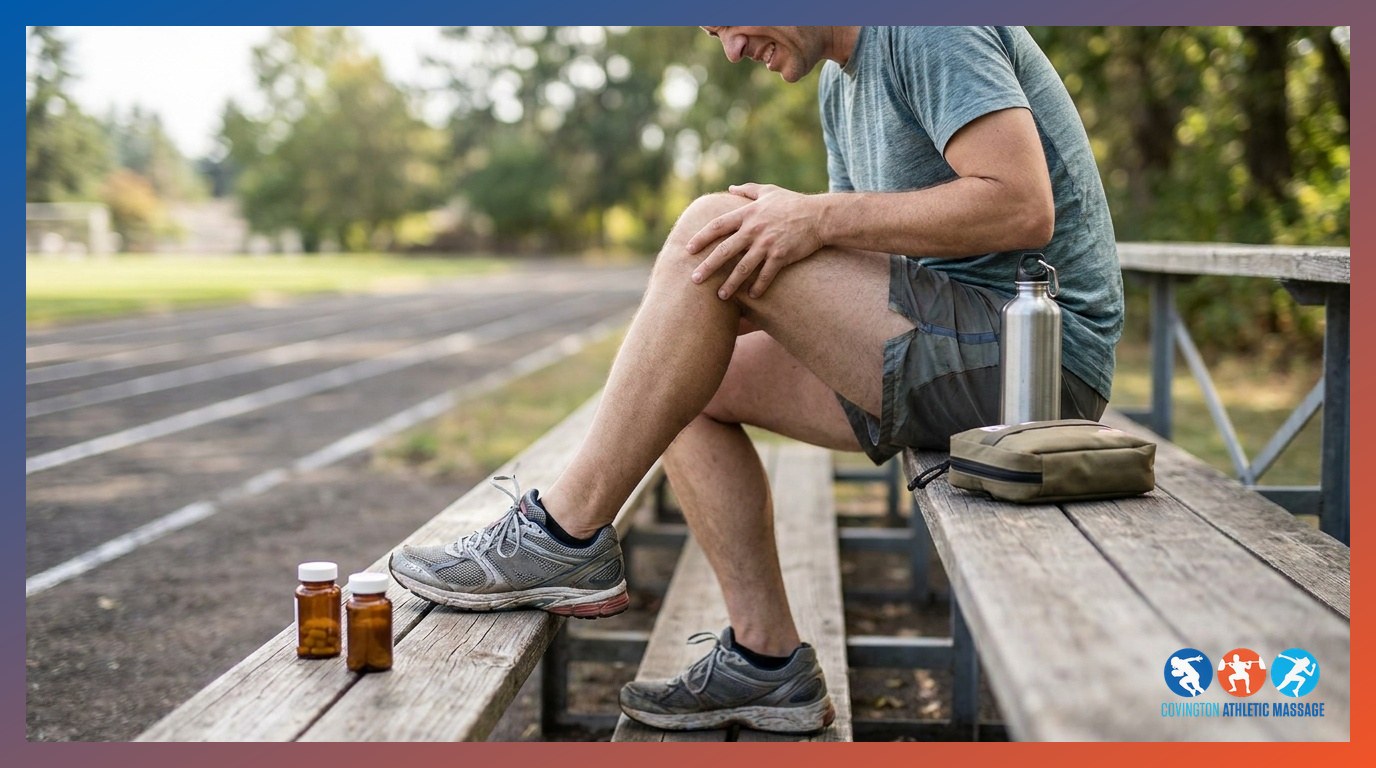
According to a 2024 Journal of Science and Medicine in Sport review, NSAID use is prevalent in sport and at times routine without medical indication or supervision. Five practical concerns push athletes toward other options:
- Masking without fixing. NSAIDs do not address the underlying mechanical causes of athletic pain such as muscle adhesions, trigger points, and restricted fascia. Many athletes even take NSAIDs before training to pre-empt soreness, yet a review indexed in PubMed notes that scientific evidence for this prophylactic approach is currently lacking. When the dose wears off, the adhesion is still there.
- Cumulative health risks. Prolonged NSAID use carries risks including gastrointestinal damage, cardiovascular strain, and impaired muscle repair, concerns especially relevant to athletes with high training loads. The Journal of Science and Medicine in Sport (2024) reports dyspepsia in 10% of NSAID users, a two-to-fourfold increase in significant upper gastrointestinal events, and harm spanning the cardiovascular, gastrointestinal, and renal systems.
- Slower healing, not faster. Inflammation is mechanically necessary for soft-tissue repair, which means routine NSAID use can actually slow tendon and muscle healing. A 2024 study in Sports (MDPI) found that the NSAID indomethacin significantly blocked prostaglandin production and significantly suppressed the natural exercise-driven increase in collagen synthesis, while also inhibiting the normal rise in satellite cell activity after exercise. A 2025 ResearchGate-published review frames the same conflict: NSAIDs remain a first-line treatment for post-traumatic sports pain, yet suppressing inflammation collides with the controlled inflammation that tissue healing requires.
- Escalation and dependency. Recurring sports pain that outlasts over-the-counter doses can push athletes toward stronger prescription analgesics, where tolerance and dependency become real concerns with repeated use.
- Performance goals. Athletes measure success in function: range of motion, load tolerance, and training continuity. Symptom suppression alone restores none of these.
The gap between quieting pain and restoring function explains the broader shift in sports medicine and athletic training practice toward evidence-based natural care. The same shift drives interest in drug-free pain relief for active adults, where the goal is tissue that works, not just tissue that hurts less.
How does sports massage relieve athletic pain without medication?
Sports massage reduces athletic pain through mechanical pressure, circulatory enhancement, and neurological pain-gate modulation. Pressure breaks adhesions and releases trigger points, fresh blood flow clears the metabolic waste that sustains pain signals, and tactile input interrupts pain transmission to the brain.
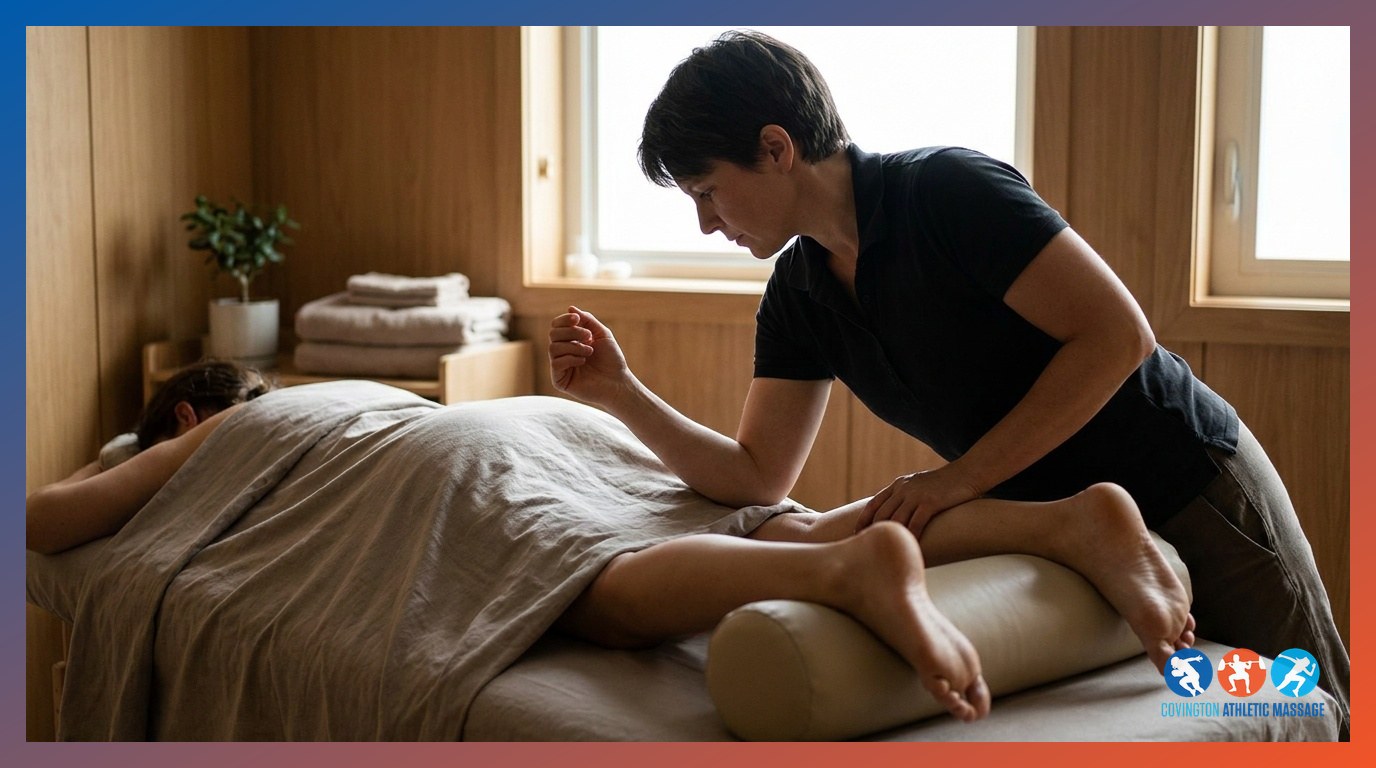
Most explanations of massage collapse all of this into one vague “relaxes muscles” claim. That shorthand misses why relief from massage tends to outlast relief from a pill: each mechanism removes a source of pain instead of masking the sensation.
1. Mechanical release. Direct pressure breaks down adhesions, the stiff bands of cross-linked tissue that restrict movement, and deactivates trigger points, the irritable knots that refer pain elsewhere. Sessions often include myofascial release, a technique applying slow sustained pressure to the fascia surrounding muscle, which frees restricted tissue and quiets trigger-point pain while restoring fascial glide.
2. Circulatory clearance. Increased local blood flow flushes lactate and inflammatory cytokines that keep pain signals firing after hard training. A 2025 ScienceDirect review ties massage to reductions in inflammatory markers such as sVCAM-1 and TLR4, alongside lower pain and inflammation following sports-related musculoskeletal injury.
3. Neurological gating. Gate control theory, as summarized in EBSCO’s academic database, holds that large nerve fibers carrying touch and pressure close spinal cord gates and block pain signals. ClinicalTrials.gov describes massage recruiting fast-conducting A-alpha and A-beta fibers that stop small pain-carrying fibers from reaching the upper nervous system.
4. Neurochemical response. Massage stimulates endorphin release, the body’s built-in analgesic, adding a natural chemical layer of relief.
Deep tissue massage is a primary drug-free intervention for chronic and recurrent athletic pain offered at Covington Athletic Massage. General sports massage blends lighter strokes and stretching around event timing; deep tissue work applies slow, sustained pressure that reaches deeper muscle layers and fascia, which suits pain that keeps returning. A 2020 meta-analysis indexed on ResearchGate found deep tissue produced greater pain reduction than Swedish, sports-specific, or myofascial techniques (p = 0.008), with benefits most pronounced at bi-weekly sessions lasting 40 to 60 minutes. Covington Athletic Massage structures massage-based pain relief for athletes around that schedule.
Durability separates massage from medication. Medication dulls pain perception only while the drug circulates; massage changes the tissue and the signaling environment that generate pain, so relief persists after the session. The same 2020 analysis reported significant pain reduction versus control (SMD = −0.87) and a large effect on delayed onset muscle soreness, with an SMD up to −1.51 peaking 48 to 72 hours after treatment. Findings like these tell the story of massage therapy earning its recovery role in training programs across Covington.
What other natural methods complement massage for athletic pain relief?
Heat therapy, cold therapy, active recovery movement, and anti-inflammatory nutrition complement sports massage for athletic pain relief. Each method fits a specific phase of recovery, and timing relative to the injury determines which one applies.
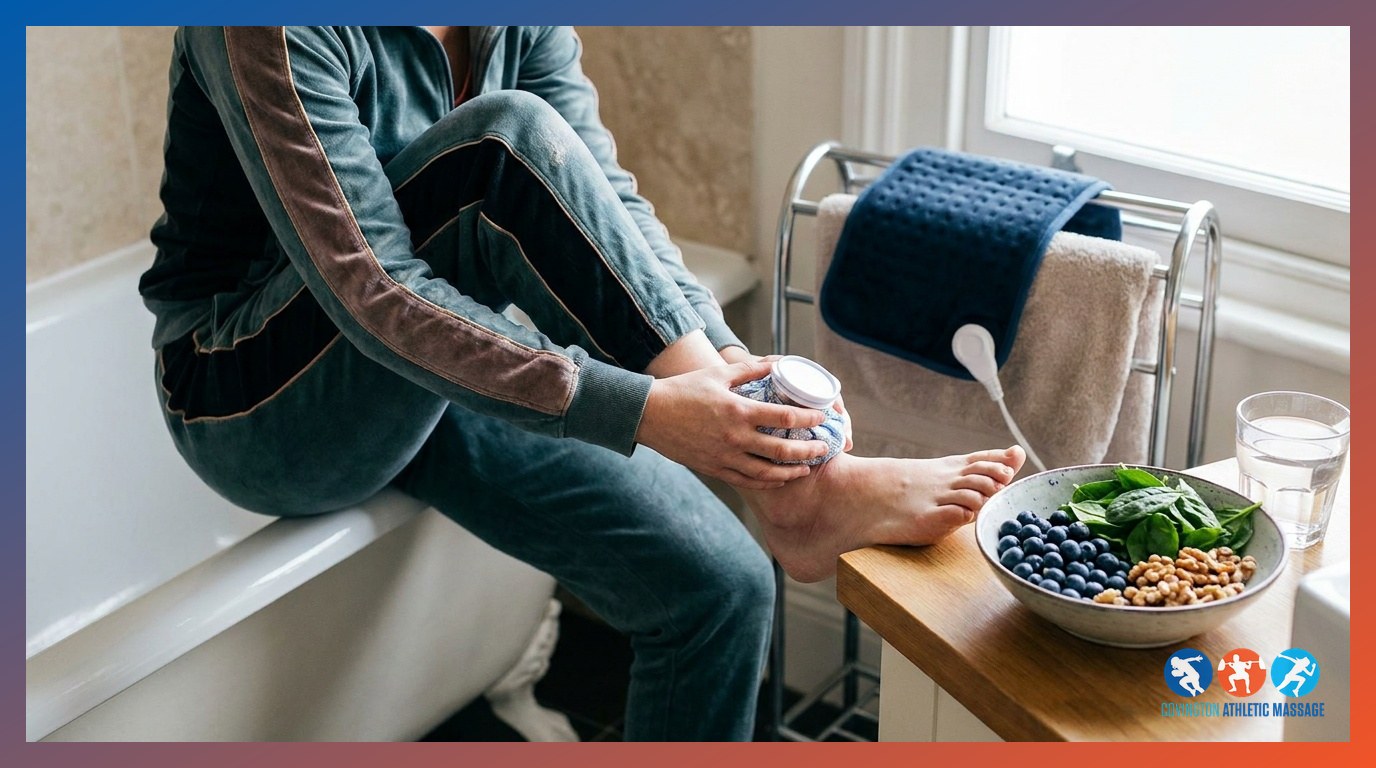
Heat and cold therapy complements sports massage by preparing tissue before a session and reducing acute inflammation afterward. Heat produces vasodilation and muscle relaxation, so heat suits pre-session preparation and chronic stiffness. Heat is contraindicated during the first 72 hours after an acute injury, when ice-driven vasoconstriction limits swelling instead. Cold therapy fits acute injuries and post-exercise inflammation, though cold never substitutes for heat in chronic conditions. These interventions are not interchangeable, and massage applied too early to an acutely inflamed site can worsen swelling, so sequencing matters.
Active recovery movement modulates pain perception by stimulating endorphin release and maintaining joint mobility between massage sessions. Low-intensity walking, swimming, or easy cycling sustains circulation and prevents deconditioning while tissue heals.
Anti-inflammatory nutrition supports the same goal systemically. According to a 2024 review from the National Center for Biotechnology Information, omega-3 fatty acids demonstrate anti-inflammatory biochemical activity in athletes. A 2025 meta-analysis published through PMC found tart cherry juice improved muscular function and lowered the inflammatory biomarkers interleukin-6 and interleukin-8 after exercise-induced muscle damage, and a 2026 systematic review in Sports Medicine – Open covering nineteen trials reported significantly better maximal voluntary contraction recovery at every measured time point. Turmeric supplies curcumin, a food-based compound athletes commonly use alongside these options. No supplement releases fascial adhesions or scar tissue, so nutrition reinforces manual therapy rather than replacing manual therapy.
Foam rollers and massage guns help many athletes between appointments, yet self-myofascial tools reach only superficial tissue and lack the diagnostic precision of a trained therapist. The natural pain relief for active adults covers how these methods sequence around scheduled massage sessions.
Does the type of athletic pain (acute vs. chronic) change which natural approaches work best?
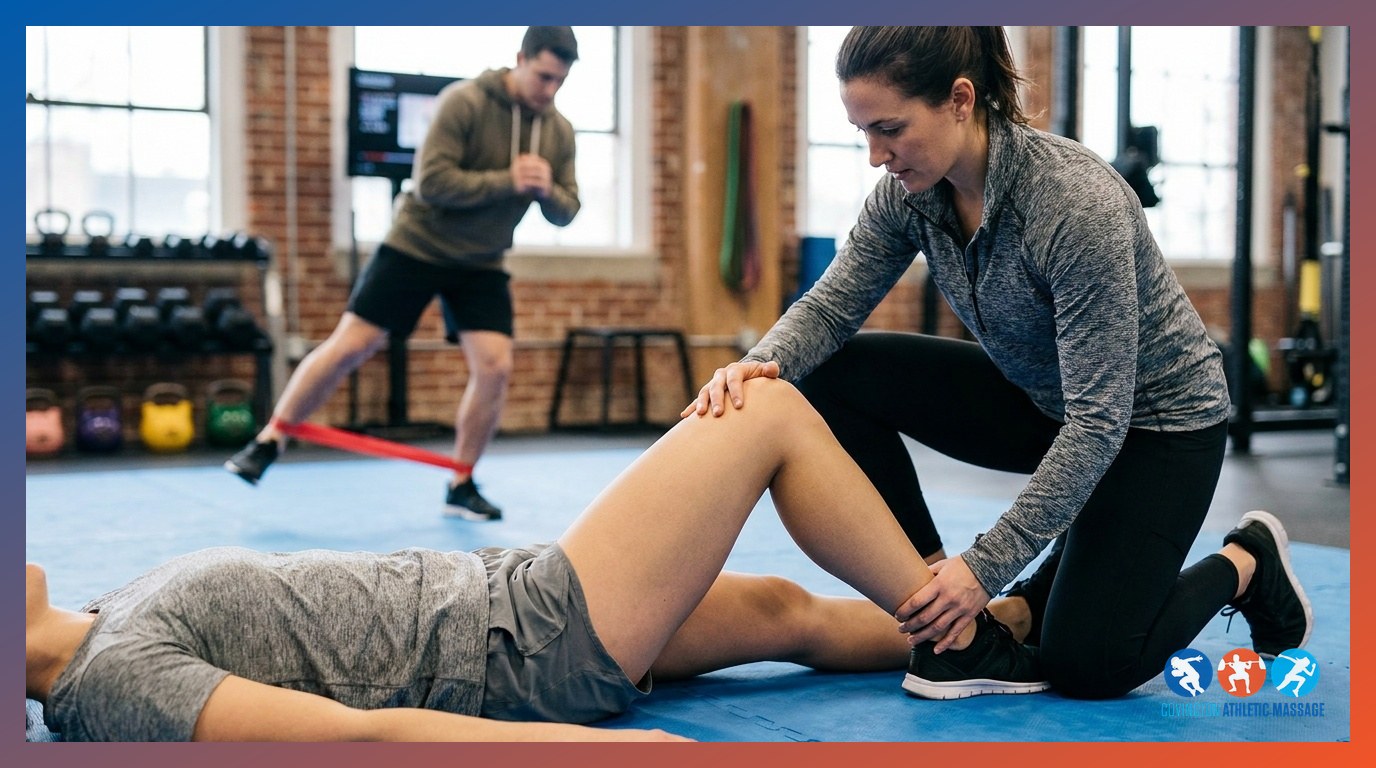
Yes, pain type changes treatment. Acute athletic pain responds best to protection, rest, ice, compression, and elevation during the first 72 hours, while chronic pain responds best to hands-on therapy and structured movement. A natural pain relief protocol applies to both acute and chronic athletic pain conditions when interventions are matched to injury type and timeline.
| Factor | Acute pain (first 72 hours) | Chronic or recurrent pain |
|---|---|---|
| First response | Protect, rest, ice, compress, elevate | Hands-on therapy and structured movement |
| Massage status | Contraindicated at the injury site until acute inflammation subsides | Primary intervention once tissue tolerates pressure |
| Risk of waiting | Brief rest protects healing tissue | Passive rest worsens outcomes through deconditioning and scar tissue accumulation |
Direct pressure on swollen tissue can extend bleeding and delay repair, which is why massage waits until the acute phase passes. Correctly distinguishing acute from chronic sport pain determines which column applies to a given injury.
The natural progression runs ice, then heat, then massage, then active recovery as pain moves from acute to sub-acute to chronic. Ice settles fresh inflammation, heat loosens stiff tissue for hands-on work, massage restores tissue quality, and active recovery rebuilds strength and capacity.
Condition priorities differ further:
- Tendinitis: progressive tendon loading and eccentric strengthening come first; ice provides only short-term symptom relief because tendon tissue adapts to load, not rest.
- Muscle strains: gentle compression and massage around the injured fibers come first, followed by graded stretching once the tissue tolerates lengthening.
- Overuse conditions: correcting the training pattern that causes the irritation comes first, with hands-on therapy clearing the accumulated tissue restriction.
For chronic athletic pain specifically, “do nothing and wait” is the worst available option, not a safe default. Passive rest without hands-on intervention or structured movement allows deconditioning and scar tissue accumulation to compound over time.
Athletes with suspected fracture, nerve damage, or vascular compromise require medical evaluation before any natural intervention. The evidence-based sports injury management guide covers broader injury triage, while natural pain management addresses musculoskeletal soft-tissue pain.
How can athletes in Covington, GA access drug-free pain management through Covington Athletic Massage?
Athletes in Covington, Georgia access drug-free pain management at Covington Athletic Massage by booking an appointment, choosing the session type that matches the pain, and completing a hands-on first visit that ends with an aftercare plan.
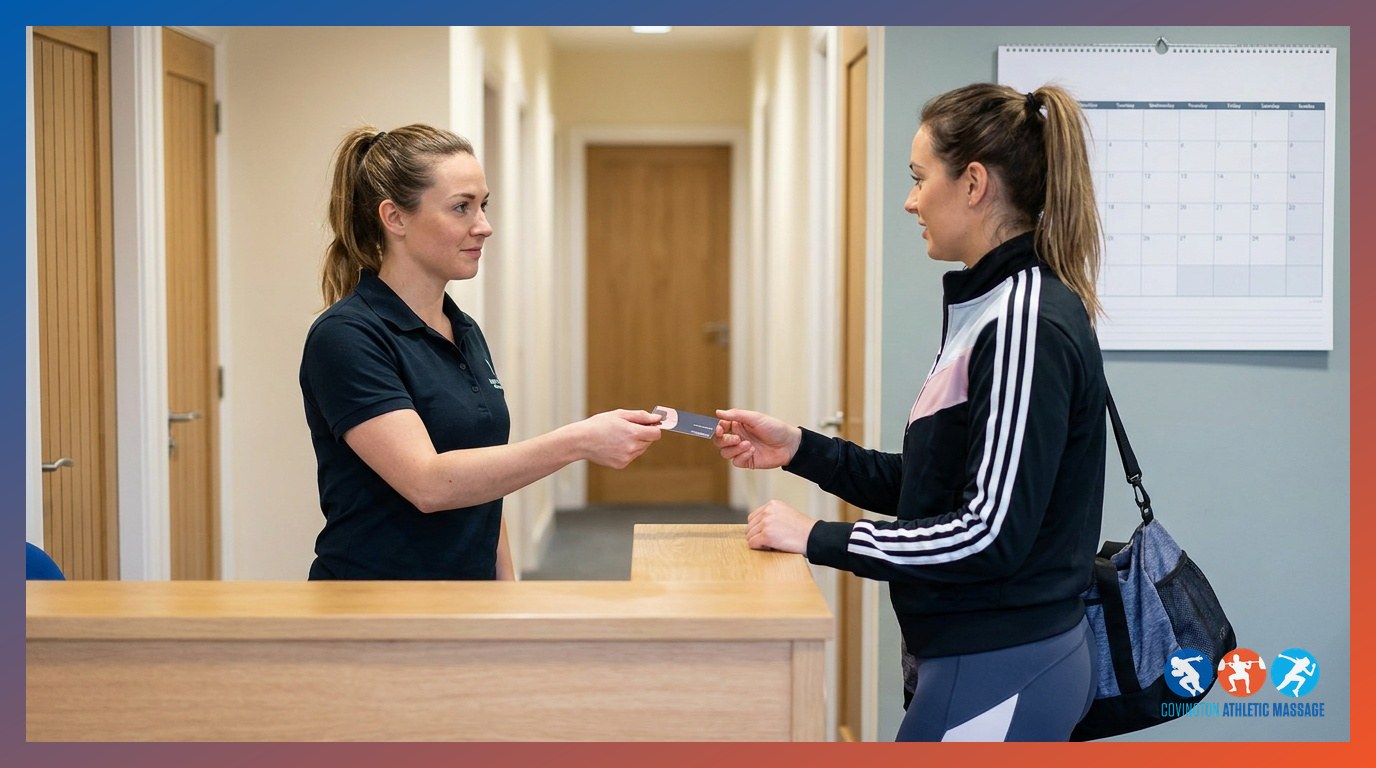
Covington Athletic Massage provides deep tissue sports massage as the hands-on anchor of a drug-free pain management plan for athletes in Covington, Georgia. The clinic serves active adults and competitive athletes managing training-related pain, overuse soreness, and injury recovery, and every session relies on skilled manual work rather than medication. The drug-free fixes for sport injuries covers how massage works alongside rest, mobility work, and sensible load management. Getting started takes four steps.
1. Match the session to the pain. Pain Relief Therapy targets one specific problem area, such as a tight hip or a sore shoulder. Injury Care Massage supports healing from strains, sprains, and overuse injuries. Full Body Recovery addresses whole-body fatigue between hard training blocks.
2. Book the appointment. Athletes schedule by phone or online, and first-time clients can describe the painful area while booking so the massage therapist prepares for that concern.
3. Complete the intake at the first visit. A massage therapist reviews health history, current training load, and the painful area, then watches the athlete move before any table work starts. First appointments run longer than follow-up visits because the assessment takes extra time, so plan for an unhurried first session.
4. Receive treatment and an aftercare plan. On the table, the therapist applies deep tissue pressure to the muscles driving the pain, checks comfort throughout, and finishes with stretching or movement guidance. Each athlete leaves with a written plan covering hydration, gentle movement, and when to schedule the next session.