Covington Athletic Massage delivers deep tissue massage in Covington, GA, purpose-built for athletes and active adults. Deep tissue massage applies sustained, high-pressure technique to the deeper muscle layers where chronic tension, injury residue, and performance limitations actually live. Covington Athletic Massage is the only clinic in Newton County built specifically around athletic soft-tissue care.
What is deep tissue massage and how does it actually work on muscle tissue?
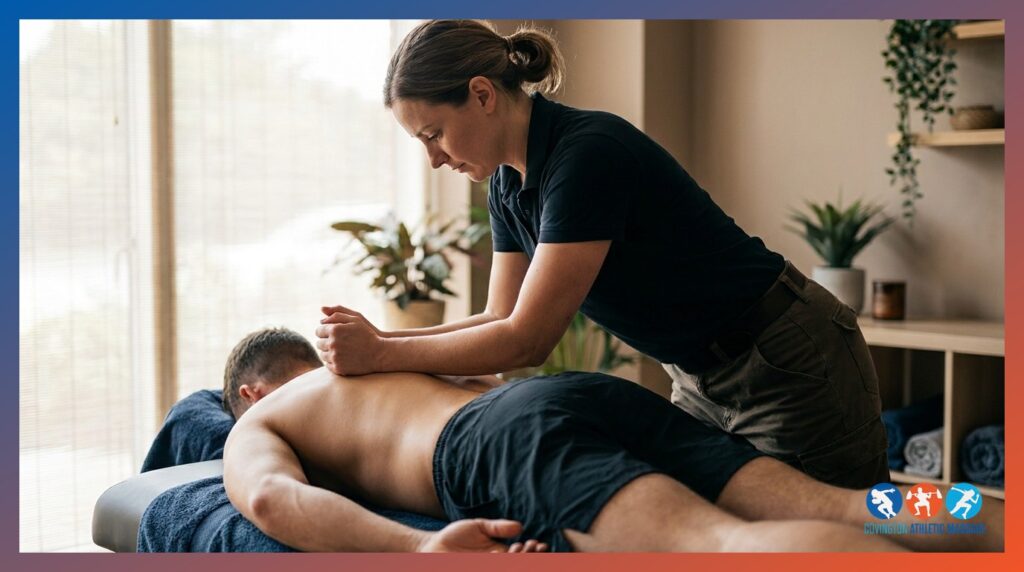
Deep tissue massage targets the deeper layers of muscle tissue and fascia, not just the superficial muscle groups that relaxation massage addresses. A therapist applies slow, deliberate strokes and sustained pressure to break down adhesions, restore normal sliding between tissue layers, and release chronic tension.
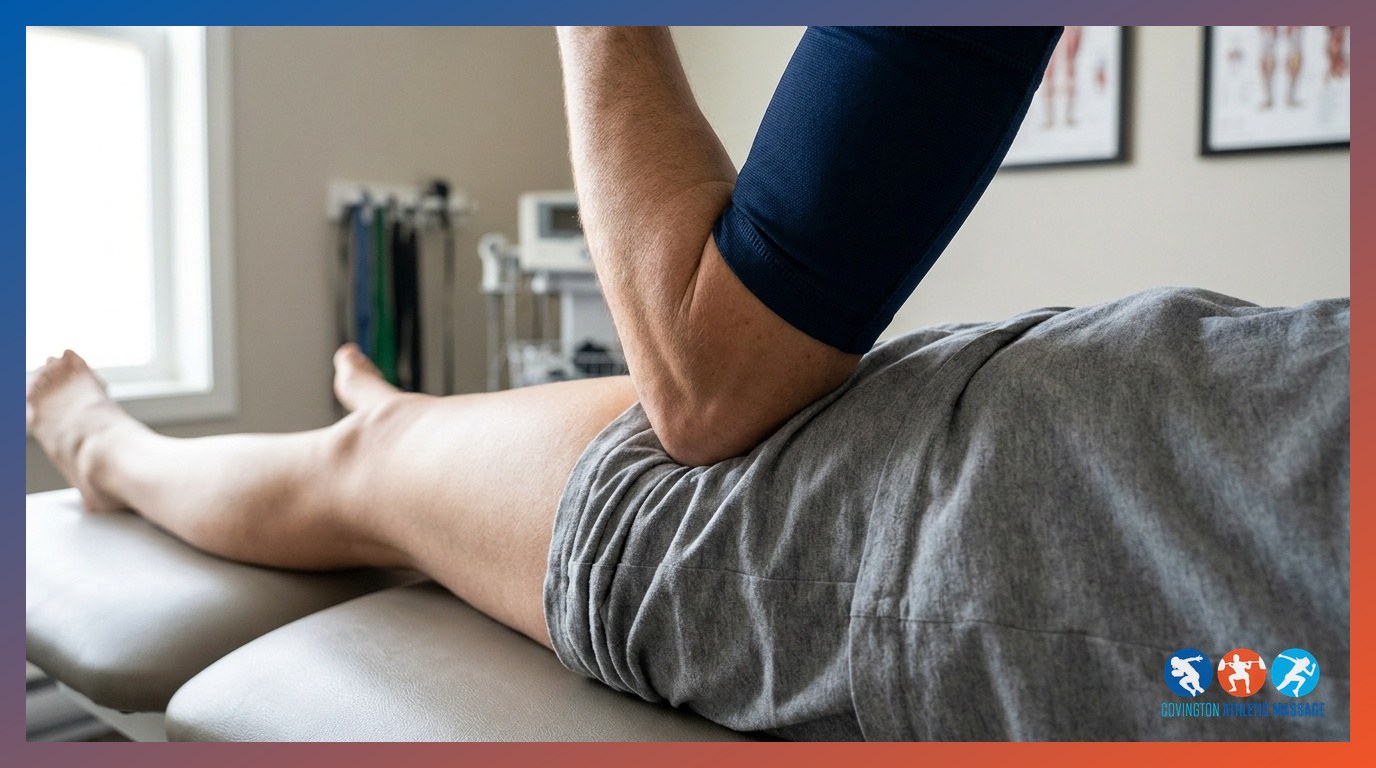
The mechanism relies on cross-fiber pressure. Repetitive strain bonds muscle fibers and fascial layers together, forming adhesions, and strokes applied across the grain of the muscle create a controlled shear that separates those bonded fibers. Once an adhesion releases, the tissue layers glide over one another again, which restores range of motion and eases the pulling sensation athletes often describe as tightness.
The myofascial release component works on fascia itself. Fascia is a continuous connective tissue network that contributes to force transmission, postural organization, and movement coordination, according to research published in Frontiers in Physiology. Repetitive athletic loading, from sprinting to heavy lifting, stiffens fascia and binds adjacent layers together. Myofascial release answers that restriction with continuous, slow, and steady pressure held at the tissue barrier until the tissue relaxes, and ClinicalTrials.gov from the U.S. National Institutes of Health describes direct myofascial release as firm pressure applied to break adhesions and remodel tissue. Athletes who want a closer look at each application, from slow longitudinal strokes to sustained static holds, can find the deep tissue strokes and methods explained in the clinic’s technique resources.
Deep tissue massage differs from Swedish massage in three concrete ways. On session goal, Swedish massage promotes general relaxation and circulation, while deep tissue massage releases chronic tension patterns and corrects abnormal tissue. On stroke direction, deep tissue massage uses slower strokes and greater sustained pressure applied across the grain of the muscle, while Swedish massage uses long gliding strokes that follow the muscle. On tissue depth, Swedish massage works the superficial musculature, while deep tissue massage reaches the deeper layers of muscle and fascia.
Pressure alone does not define the modality. Technique, the angle of contact, and the duration of each hold separate deep tissue massage from simply pressing harder, which is why a lighter but correctly angled stroke often reaches deeper layers than heavy general pressure.
Deep tissue massage is also not inherently painful. The “no pain, no gain” expectation is a common misconception: effective work uses sustained, controlled pressure that can feel intense yet stays within the client’s tolerance. A therapist who pushes through sharp pain bypasses the muscle’s protective reflex, and the guarding response that follows reduces the therapeutic effect instead of increasing it. Sharp pain helps no one.
Some clients experience mild soreness for 24 to 48 hours after a session, particularly in areas with significant adhesion buildup. That soreness is a normal tissue response, not an injury, and hydration plus light movement typically helps the soreness resolve faster.
What makes Covington Athletic Massage different from a regular massage spa for deep tissue work?
Covington Athletic Massage is an athlete-focused deep tissue clinic, not a general relaxation spa. Every session opens with a targeted intake, calibrates pressure to the tissue’s actual state, and pursues one functional goal, with no unrelated add-on services.
Covington Athletic Massage is built around athletic soft-tissue care. The intake process, session structure, and pressure calibration all orient to sport-specific loading patterns and injury history rather than relaxation. The “deep tissue” label itself names only a technique: the Swedish Institute reported in 2023 that deep tissue massage uses slow, deliberate strokes with intense pressure to reach deep muscle layers and address specific problem areas, and the American Institute of Alternative Medicine noted in 2024 that the modality works intense strokes across the muscle grain, including stripping and trigger point therapy. A spa and an athletic clinic can use identical strokes. The map is the difference.
Athlete-focused deep tissue massage differs from spa-style massage in session structure, pressure calibration, and targeted outcome focus. A general spa session applies consistent medium-to-firm pressure across the whole body to produce relaxation. An athletic deep tissue session maps the same 60 minutes around sport-specific loading patterns, the problem tissues identified during intake, and functional recovery goals, so one hour produces a materially different outcome.
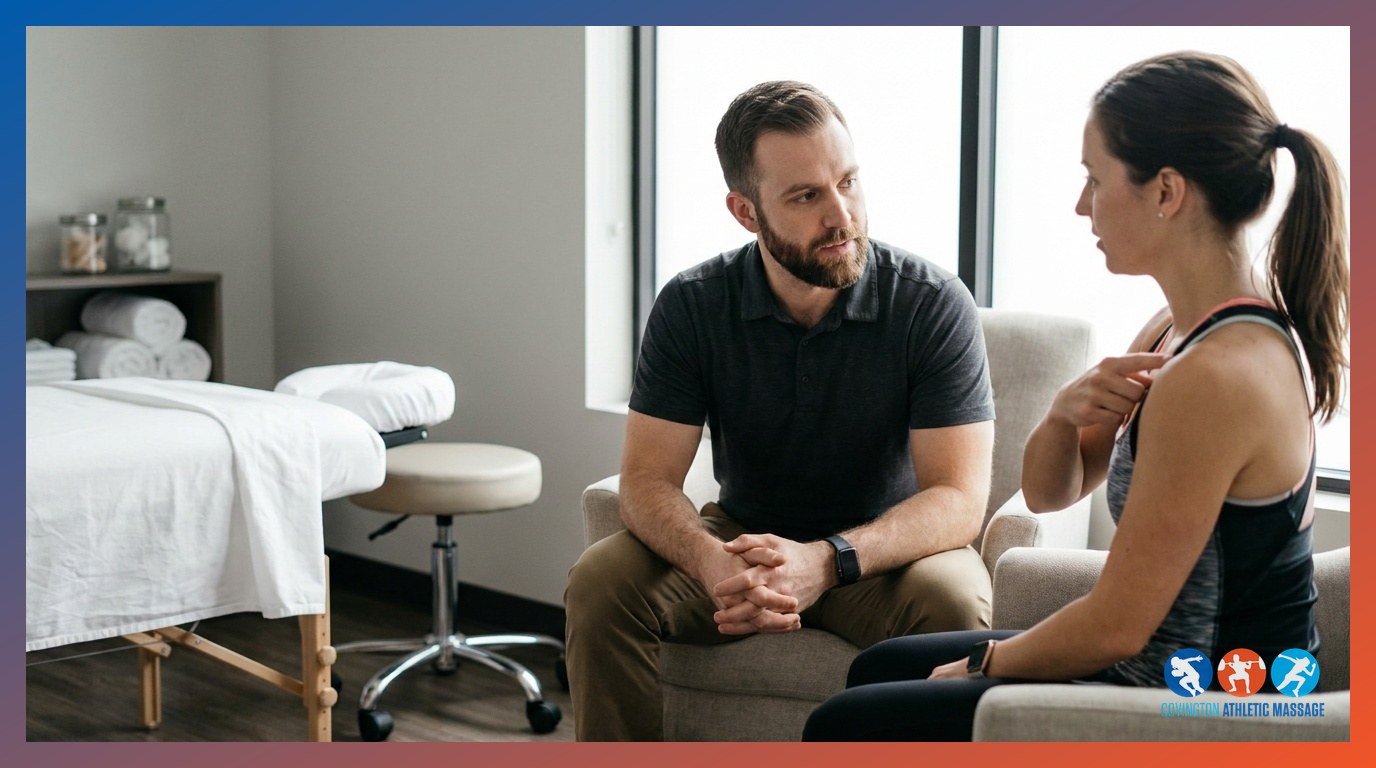
Every appointment begins with a targeted intake conversation before any hands-on work. The therapist asks about the client’s sport or activity type, the tissues causing trouble, injury history, and whether the goal is recovery or performance. The intake conversation shows each athlete how sports massage goals differ from relaxation goals in concrete terms, because a pitcher managing shoulder tightness mid-season and a desk worker with general back tension should not receive the same session.
Pressure follows the tissue, not a preset level. The therapist applies pressure relative to the tissue’s actual state and the athlete’s tolerance, adjusting within the session as the tissue responds. A guarded, recently strained muscle receives different work than warm, chronically tight tissue, and a fixed “firm” setting would treat both the same way.
The session stays on the goal set in intake. Covington Athletic Massage does not upsell add-on services unrelated to athletic outcomes, so the full appointment serves the result the client walked in with.
Anyone vetting a therapist for athletic needs can hold a clinic to the athlete-focused standard, and athletes comparing deep tissue specialists in Covington will find that standard practiced at Covington Athletic Massage.
Who Benefits from Deep Tissue Massage in Covington, and What Conditions Does It Address?
Runners, cyclists, CrossFit athletes, and team-sport players in Covington benefit from deep tissue massage. Covington Athletic Massage applies deep tissue massage to chronic muscle tension, soft-tissue injury recovery, mobility restriction from scar tissue, and athletic performance maintenance.
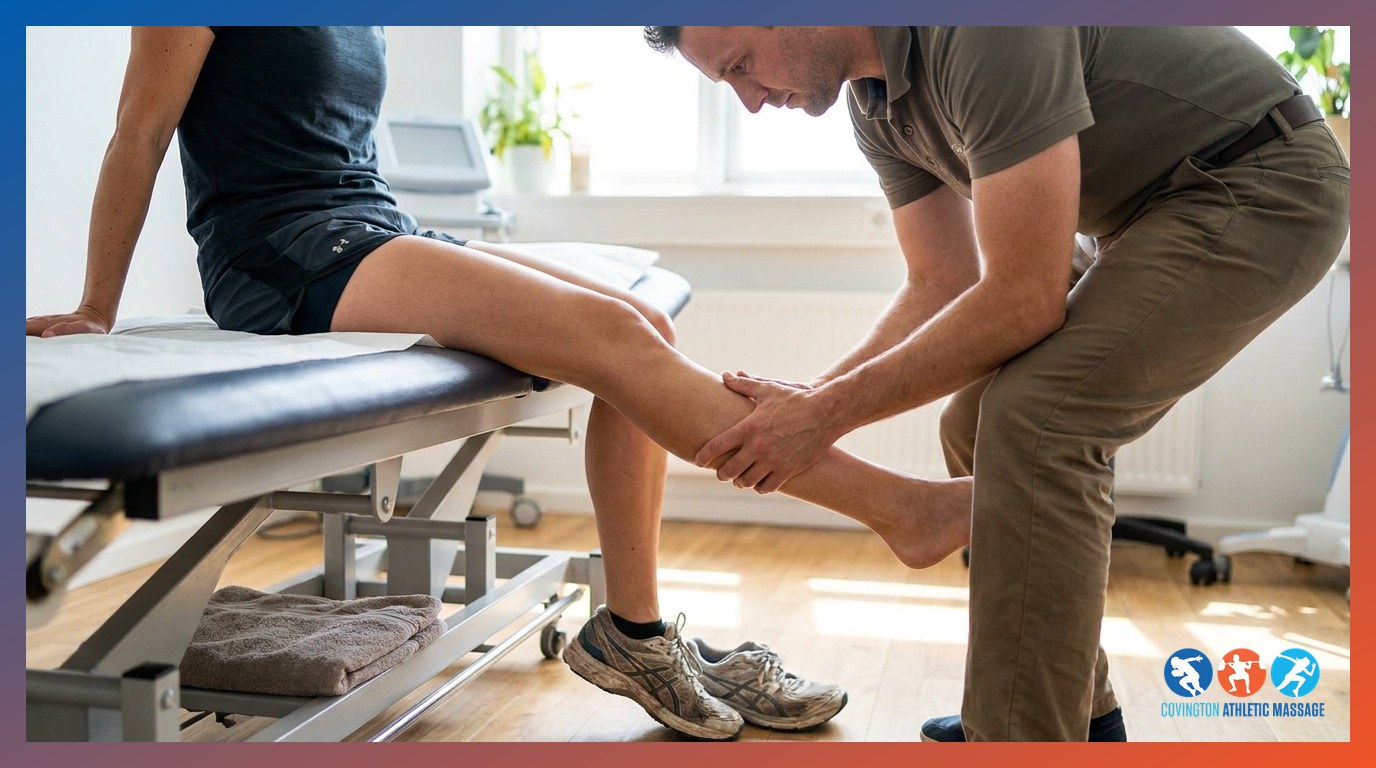
Chronic muscle tension and knots develop when repetitive training loads outpace recovery. According to ClinicalTrials.gov (U.S. National Institutes of Health), athletes in repetitive or high-load sports including swimming, tennis, and weightlifting are especially vulnerable to myofascial trigger points, and prolonged static postures in cycling or wrestling increase trigger point development in the cervical musculature.
Soft-tissue injury recovery covers muscle strains, tendinitis, and delayed-onset muscle soreness (DOMS). Frontiers in Public Health (2025) reports that DOMS develops within 12 to 24 hours after exercise, peaks at 24 to 72 hours, and usually resolves within 7 days. A 2025 randomized controlled trial in Frontiers in Physiology compared six recovery interventions and found that massage therapy stood out for reducing markers of muscle damage and inflammation in participants with DOMS.
Mobility restriction often traces to scar tissue or fascial tightening from prior injuries. ClinicalTrials.gov reports that fascial adhesions in physically active people can decrease performance over time while the body heals from mechanical stress, and slow, sustained pressure helps break up adhesions to restore range of motion.
Many athletes book sessions without any injury at all. A 2025 randomized controlled trial in the International Journal of Therapeutic Massage & Bodywork followed 150 athletes through bi-weekly 40-minute sessions over 8 weeks and found improved athletic performance, flexibility, and muscle recovery. Covington Athletic Massage schedules deep tissue therapy for local competitors as ongoing maintenance between training cycles.
Deep tissue massage is safe for most healthy adults; contraindications include acute inflammation, open wounds, blood clot risk, and certain skin conditions. Athletes with active injuries should mention them during intake so the therapist can adjust pressure and approach.
Where is Covington Athletic Massage located, and which areas does the clinic serve?
Covington Athletic Massage is located in Covington, Georgia, the county seat of Newton County. Covington Athletic Massage serves athletes and active adults across Covington, Newton County, and surrounding communities including Conyers, Social Circle, and Oxford.
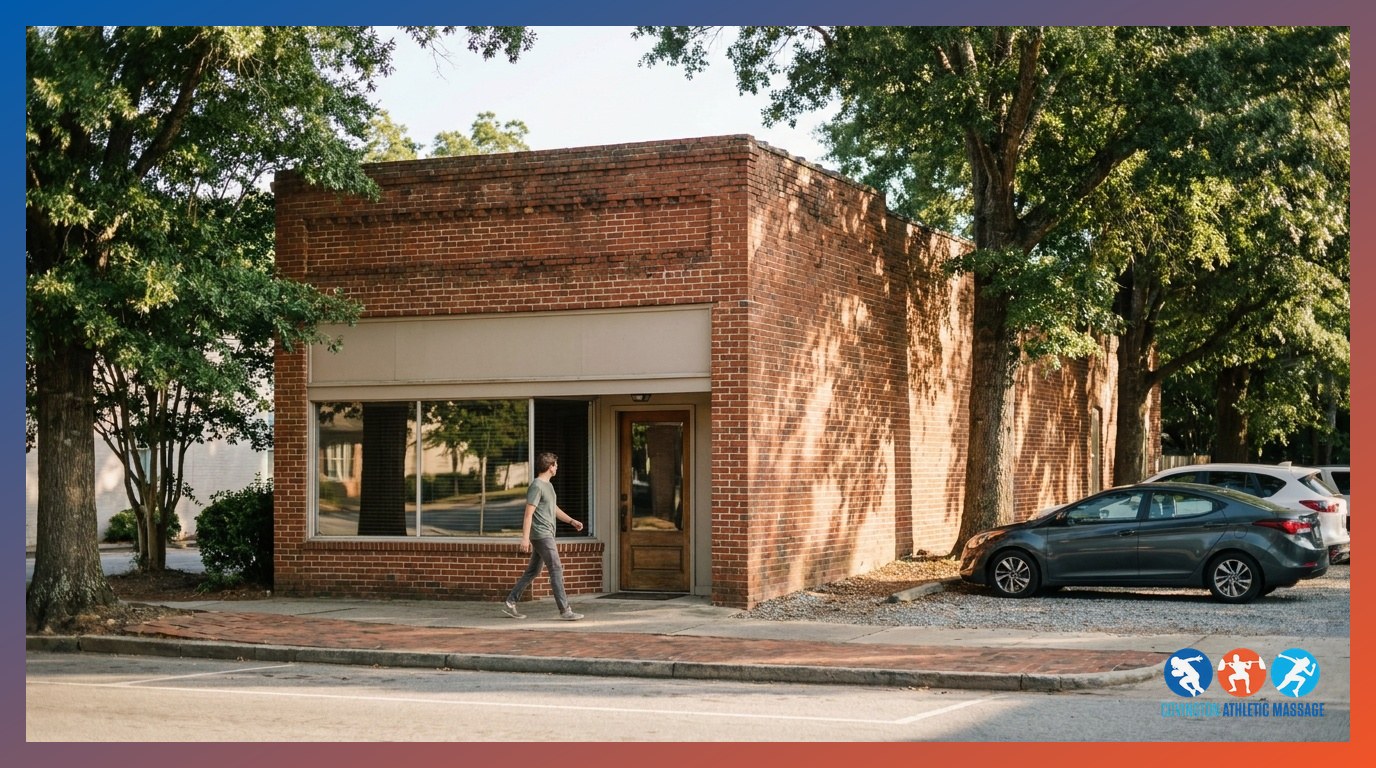
Most clients live or train in Covington and elsewhere in Newton County, and those clients book sessions around local training schedules. A steady share of regulars drives in from Conyers, Social Circle, and Oxford, because none of those communities supports a dedicated athletic massage practice.
Newton County has no other dedicated athletic soft-tissue massage clinic, and the nearest comparable options sit 25 to 35 minutes away in metro Atlanta. Local athletes who skipped that drive historically faced two outcomes: settle for general spa massage or go untreated. Covington Athletic Massage eliminates the go-untreated outcome by giving Newton County athletes a proximate specialist for soft-tissue treatment.
Athletes traveling from Conyers or Social Circle can pair a session at the Covington GA sports massage clinic with a same-day workout at one of Covington’s training facilities, and the Newton County location makes Covington Athletic Massage a practical mid-point stop between home and training.
How do I book a deep tissue massage session at Covington Athletic Massage?
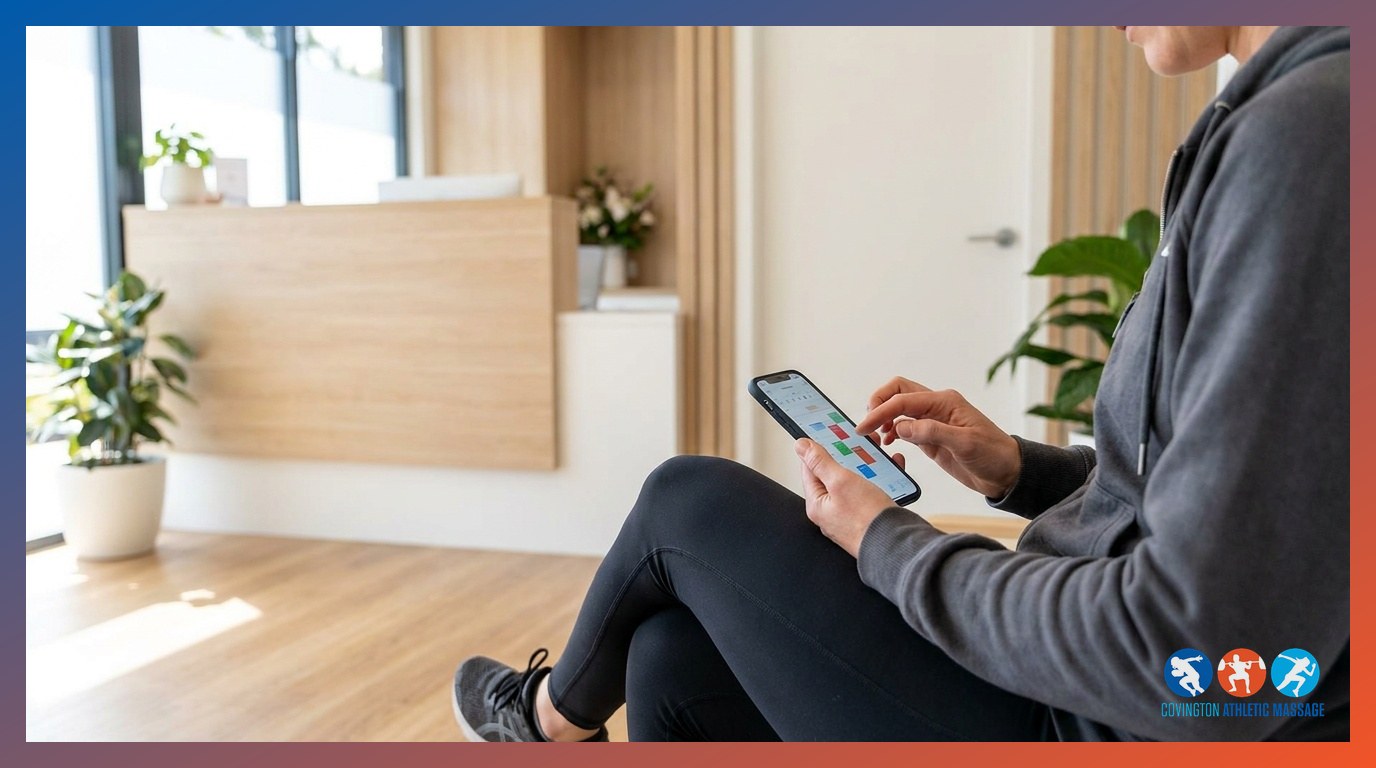
Clients book a deep tissue massage session at Covington Athletic Massage through the online scheduling system, with no referral or prescription required. New clients choose a 60-minute or 90-minute session, select an open appointment time, and complete a short intake conversation before hands-on work begins.
Sessions at Covington Athletic Massage run 60 or 90 minutes. The 60-minute session suits focused work on one or two problem areas, while the 90-minute session allows full-body work plus extra time on stubborn spots. Pricing scales with session length, so the 90-minute session carries a higher rate than the 60-minute option. Clients can view current rates for each session length at deep tissue session rates and availability alongside open appointment times.
First-time clients arrive a few minutes early for the intake conversation. The Covington Athletic Massage therapist asks about training load, current injuries, and goals for the session, then agrees on target areas and pressure with the client before the hands-on work begins. After the session, the therapist sends each new client home with specific aftercare guidance covering hydration, expected soreness over the next day or two, and a recommended gap before the next hard workout or follow-up session.
Sources
- Frontiers in Public Health, “The effect of percussion massage therapy on the recovery of delayed onset muscle soreness in physically active young men – a randomized controlled trial” (2025)
- Frontiers in Physiology, “Myofascial release and fascial-targeted mechanical interventions in musculoskeletal rehabilitation: mechanisms, modalities, and integrative physiology” (2026)
- ClinicalTrials.gov (U.S. National Institutes of Health), “Comparison of the Immediate Effects of Physiotherapist and Self-administered Myofascial Release Techniques on Flexibility and Jumping Ability in Basketball Players”
- ClinicalTrials.gov (U.S. National Institutes of Health), “Myofascial Release vs. Stretching With Ultrasound for Trapezius Trigger Points in Athletes: A Randomized Clinical Trial”
- ClinicalTrials.gov (U.S. National Institutes of Health), “Investigation of the Acute Effect of Myofascial Release Techniques and Dynamic Stretch”
- ClinicalTrials.gov (U.S. National Institutes of Health), “Deep Tissue Massage in Office Workers With Chronic Low Back Pain”
- American Institute of Alternative Medicine, “Swedish vs Deep Tissue Massage: Which One Suits Your Needs?” (2024)